Brick Repointing in Brooklyn: Brownstone Signs, Costs and Landmark Rules
Brick repointing replaces worn-out mortar between bricks before water gets into the wall, and on a Brooklyn brownstone or brick rowhouse it is one of the most important pieces of exterior maintenance you can do. Signs you need it include recessed or crumbling joints, white salt stains, damp patches inside and flaking brick faces. Done right, it uses a mortar matched to the old masonry, and on many Brooklyn blocks it needs Landmarks Preservation Commission approval first.
What is brick pointing, and how is repointing different from tuckpointing?
Brick pointing is the visible mortar in the joints between bricks. Over decades, rain, freeze-thaw cycles and wind wear that mortar down. Repointing is the repair: raking out the deteriorated mortar to a sound depth and packing in fresh mortar in layers, then tooling the joint so it sheds water.
Tuckpointing is a specific decorative technique. The joint is filled with mortar colored to match the brick, then a thin line of contrasting mortar is "tucked" along the center to make the joints look narrow and precise. In everyday use, many brick pointing contractors use "tuckpointing" and "repointing" to mean the same thing, so ask which one you are getting.
Pointing is not cosmetic. Mortar is designed to be the sacrificial part of a masonry wall. It should wear out before the bricks do, and it is far cheaper to replace than brick or brownstone.
Signs your Brooklyn brick or brownstone needs repointing
Walk around the building in daylight, and use binoculars for upper floors and parapets. Look for:
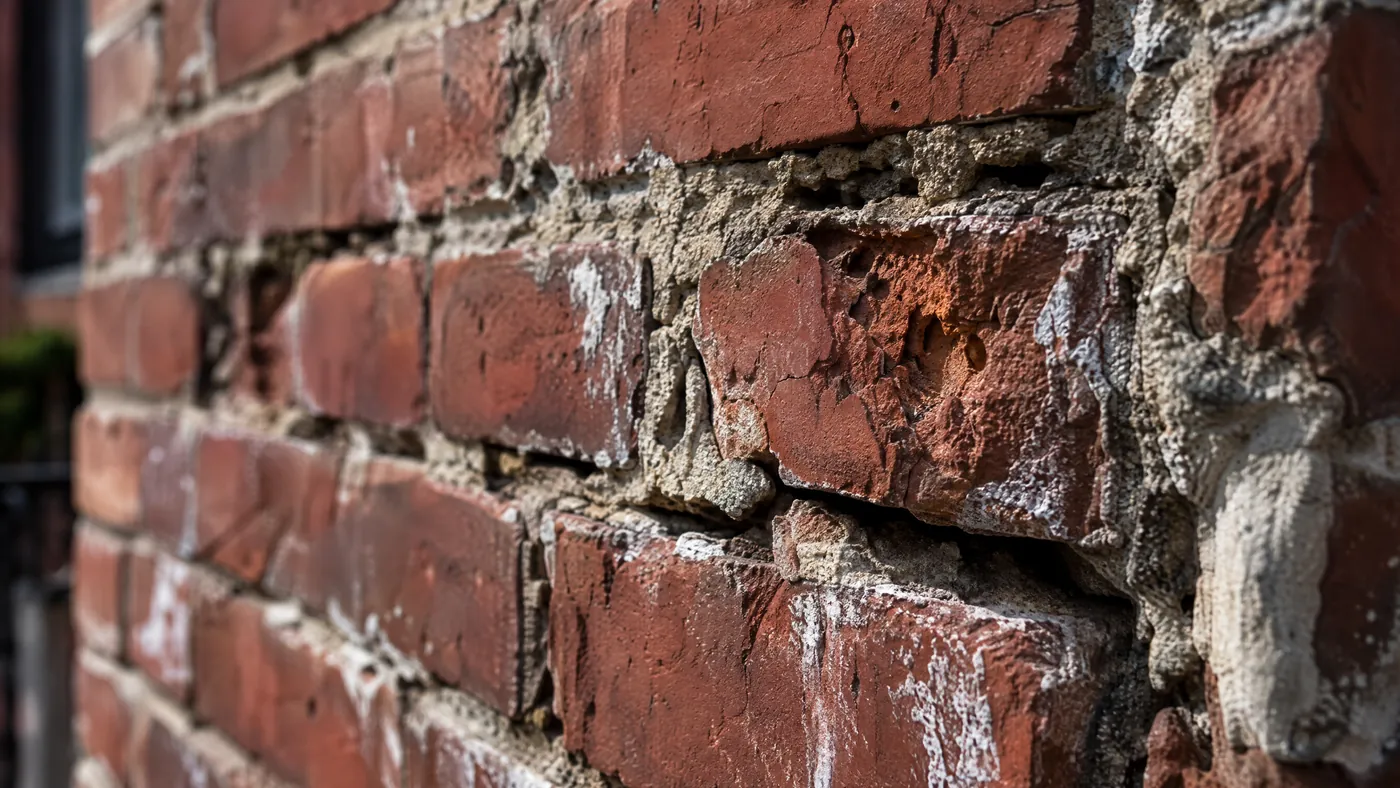
- Eroded joints. Mortar recessed more than about a quarter inch behind the brick face, sandy to the touch, or missing in spots.
- Cracks. Hairline cracks in joints, or stair-step cracks that follow the mortar. Wide or growing cracks can signal structural movement and need a closer look.
- Efflorescence. White, powdery salt deposits on the surface, a sign water is moving through the wall.
- Spalling. Brick or brownstone faces popping off or flaking, often where water has frozen inside the masonry.
- Interior damp. Peeling paint, bubbling plaster or water stains on the inside of exterior walls, especially top-floor rooms under a parapet.
- Plants and staining. Moss, weeds or dark streaks below window sills, cornices and copings.
Parapets, chimneys and the rear facade usually fail first because they take the most weather. On a typical Park Slope or Bedford-Stuyvesant rowhouse, it is common for the rear wall and parapet to need work long before the front.
Why the mortar mix matters on older Brooklyn buildings
Most Brooklyn brownstones and brick rowhouses were built in the 1800s and early 1900s with relatively soft brick and lime-based mortar. That matters more than anything else in a repointing job.
Soft brick needs soft mortar
Traditional lime mortars are softer and more vapor-permeable than modern mortars that rely heavily on Portland cement. In an old wall, the mortar should be weaker than the brick, so that movement and moisture work through the joints rather than the masonry units.
When a hard, cement-rich mortar is packed into a wall of soft brick, the joint can become stronger and less breathable than the brick around it. Water and stress then move into the brick instead. The result, often within a few winters, is spalled brick edges and faces, which is much more expensive to fix than mortar.
Matching the existing mortar
A good repointing job matches the original in:
- Strength and composition, usually a lime-rich mix suited to the brick.
- Color and texture, using sand and pigments that match the weathered original.
- Joint profile, whether flush, concave, struck or another historic profile.
- Joint width, without widening joints by grinding into brick edges.
When we price a pointing job on an older building, we look at the existing mortar and brick first and choose the mix to suit them, rather than defaulting to a standard bag mix. Ask any contractor what mortar they plan to use and why.
Brownstone patching vs brick repointing
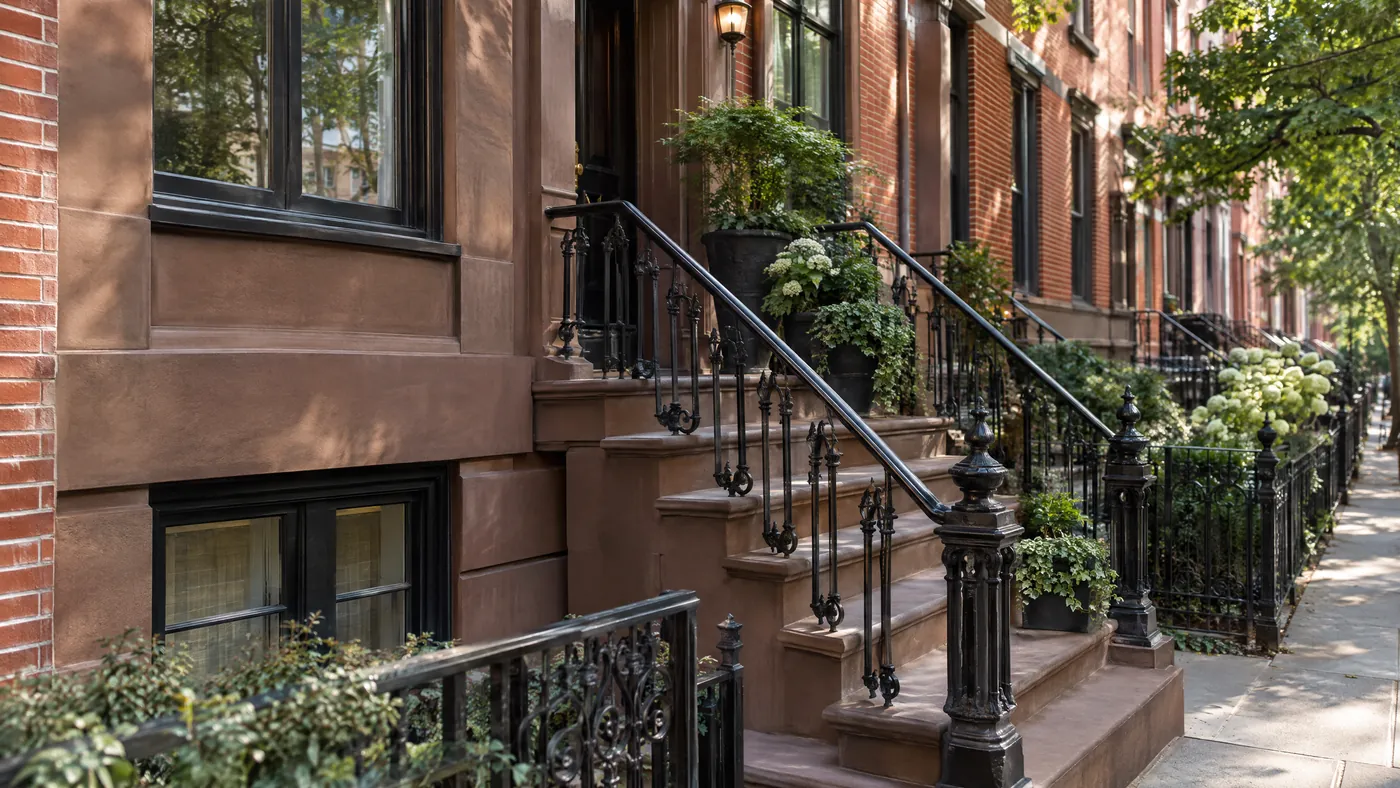
Brownstone is a sandstone, not brick. The chocolate-brown facades of Brooklyn Heights, Clinton Hill, Fort Greene and Cobble Hill are often a brownstone veneer over brick, and that stone weathers differently. It tends to delaminate and flake in layers when water gets behind the face.
Repairing brownstone usually means one of:
- Patching damaged areas with a specially formulated restoration mortar that matches brownstone color and texture, built up and carved to the original profile.
- Replacing badly failed pieces with new stone or cast units, which is more costly and less common.
- Repointing the joints between stone blocks, using the same soft-mortar principles as for brick.
Stoops and steps
Stoops take the hardest beating, with foot traffic, salt, snow and standing water. Common stoop repairs include patching treads and risers, resetting loose railings, repointing joints and fixing the platform so water drains away from the door. If the stoop meets the sidewalk, note that the sidewalk itself is the owner's responsibility in NYC; our NYC sidewalk repair guide covers violations and who pays.
How brick repointing works, step by step
A careful repointing job usually follows this order:
- Survey and test. Inspect the wall, identify problem areas and examine the existing mortar and brick.
- Permits and approvals. File with LPC and DOB where required, and arrange scaffolding or a sidewalk shed if needed.
- Protect the site. Cover windows, stoops, plantings and the sidewalk.
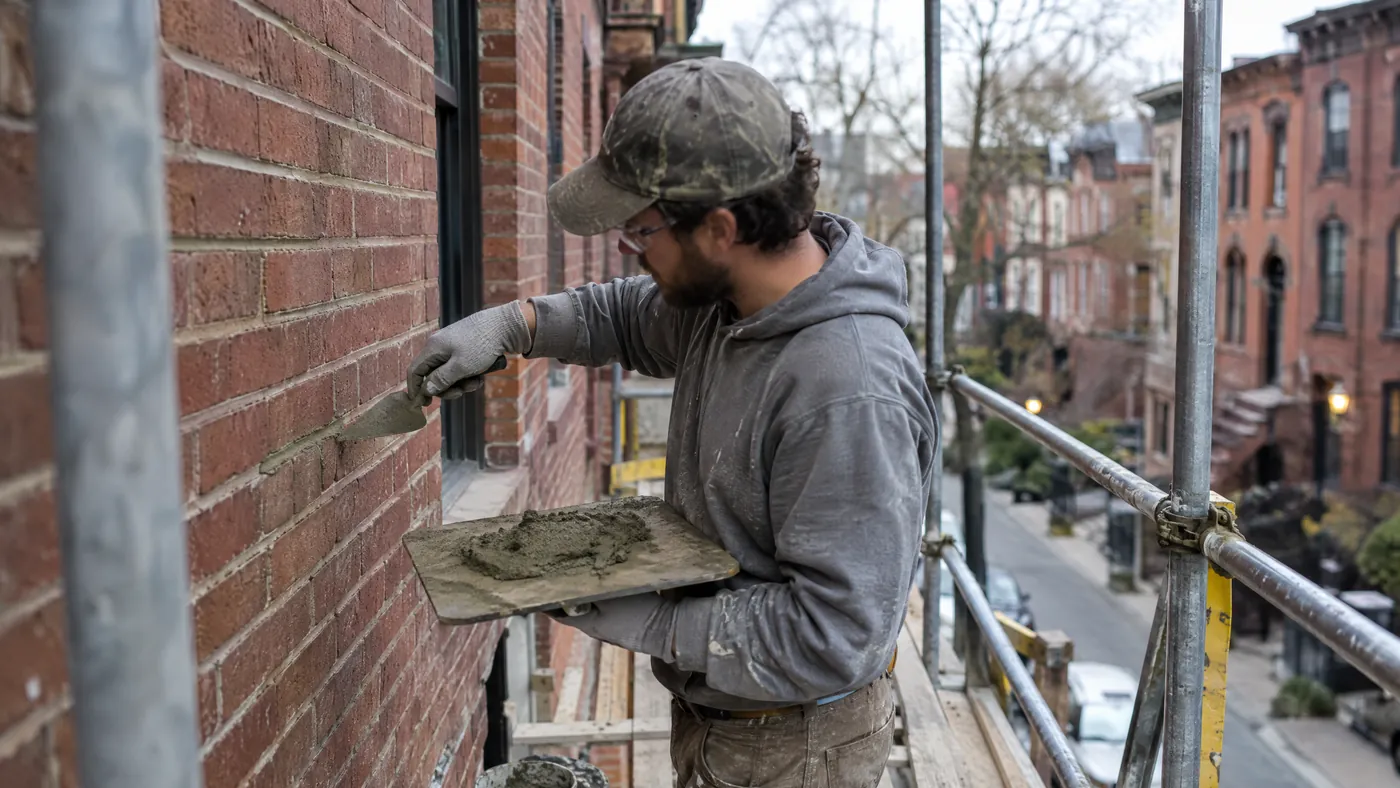
- Rake out. Remove deteriorated mortar to a consistent depth, often around two to two-and-a-half times the joint width, using hand tools or carefully controlled power tools that do not chew into brick edges.
- Clean the joints. Brush and rinse out dust so new mortar bonds.
- Pre-wet and pack. Dampen the joints and pack mortar in layers, letting each firm up before the next.
- Tool the joint. Strike the joint to the chosen profile once the mortar reaches the right stiffness.
- Cure and clean. Keep the mortar damp and shaded as it cures, then clean mortar smears from the face.
Do you need Landmarks approval to repoint in Brooklyn?
Often, yes. If your building is an individual landmark or is in a historic district, exterior work, including repointing, masonry repair, stoop work and cleaning, generally requires a permit from the NYC Landmarks Preservation Commission before work begins.
Brooklyn has more historic districts than most people realize. Park Slope, Brooklyn Heights, Fort Greene, Clinton Hill, parts of Bedford-Stuyvesant, Prospect Heights and Cobble Hill are well-known examples, and there are many others. Many neighborhoods include historic districts, and boundaries can split a block, so check the LPC map for your exact address rather than assuming.
What to expect:
- Routine, matching repairs are often reviewed by LPC staff, with the commission looking for mortar that matches the original in color, texture, strength and joint profile.
- Bigger changes, such as replacing brownstone, changing a stoop or cleaning a whole facade, may need more review and take longer.
- Working without a permit in a historic district can lead to violations and an order to redo the work.
Scaffolding and sidewalk sheds
For upper floors, cornices and parapets, a mason needs safe access. Depending on the building height and the work, that can mean a pipe scaffold, a suspended scaffold or a sidewalk shed to protect pedestrians, and these frequently require permits from the Department of Buildings. Taller buildings, those over six stories, are also subject to periodic facade inspections under Local Law 11, though most Brooklyn rowhouses fall below that height. Your contractor should handle the access permits and explain what they cost.
How much does brick repointing cost in Brooklyn?
These are typical NYC market estimates for 2026, not quotes. Real prices depend on access, how deep the mortar has failed, the mortar type, how much brick or stone needs replacing, permits and the time of year.
| Work | Typical NYC range (market estimate) |
|---|---|
| Brick repointing, per square foot | $12–$30 |
| Spot repointing, small areas (per job) | $800–$3,000 |
| Rear wall of a typical rowhouse | $8,000–$25,000 |
| Front facade of a typical rowhouse | $12,000–$40,000+ |
| Parapet or chimney repointing/rebuild | $2,500–$12,000 |
| Brownstone patching, per square foot | $50–$120 |
| Stoop repair (patching, joints, railings) | $3,000–$20,000+ |
| Scaffold or sidewalk shed, permits, LPC filing | Varies; can add significantly |
What drives cost up: upper-floor access, historic lime mortar matching, extensive spalled brick, brownstone carving, landmark review and tight scheduling. What brings it down: doing the rear and front together under one setup, catching failures early, and repointing only what needs it.
Before you sign, ask brick pointing contractors for a written, itemized estimate that names the mortar, the joint depth, the areas included and who handles permits. Check that the company holds a DCWP Home Improvement Contractor license and current insurance; you can verify through DCWP.
When is the best time of year to repoint?
Mortar needs time to cure, and frost is its enemy. As a general rule, masons avoid exterior pointing when temperatures are near or below freezing, or forecast to fall that low in the days after work. Lime mortars cure slowly and are especially sensitive.
In Brooklyn, that makes mid-spring through mid-fall the main season. Very hot, sunny or windy days are not ideal either, because mortar can dry too fast; good crews mist the wall and shade it with tarps. If you plan to repoint next year, book the survey and LPC filing over the winter so work can start once the weather settles.
Plan your Brooklyn masonry repair
Whether you own a brownstone in Clinton Hill, a brick rowhouse in Bed-Stuy or a two-family in Sunset Park, the approach is the same: inspect, match the mortar, get approvals, and repoint before water damages the brick. See our Brooklyn service area for the neighborhoods we cover, and our masonry and brick repair services for what we do.
Call or text 929-400-9900, or request a free estimate. Tell us the address and send a few photos of the joints, and we will walk you through the brick repointing and brownstone repair options and approvals for your building.