Emergency Plumber in the Bronx: What to Do Before Help Arrives
If you have water pouring through a ceiling, sewage coming up a drain, or no water at all, you need an emergency plumber now, and you need to stop the damage while you wait. In the Bronx that usually means finding the right shut-off valve, calling your super or landlord, and knowing when the problem is a gas or safety issue that goes to 911 and the utility instead. This guide walks through what counts as a real emergency, what to do in the first fifteen minutes, who is responsible in a rental, and what drives the cost of a same-day or after-hours call.
What counts as a plumbing emergency?
Not every leak is an emergency. A 24 hour plumber at 2am costs more than a weekday appointment, so sort the problem quickly.
These need help the same day, or right now:
- Burst or split pipe. Water is spraying or pouring and you cannot stop it at a fixture valve.
- Sewage backup. Waste water rising in a tub, shower or basement floor drain, often from a blocked main line.
- No water in the building or apartment. Could be a main break, a frozen pipe, a failed valve or work on the street.
- No hot water. In NYC, owners must provide hot water at 120°F year-round, so this is a repair the landlord has to treat as urgent.
- Leak into another unit or onto electrical fixtures. Water near light fixtures, outlets or a panel is a safety issue.
- Frozen pipes. Once a pipe freezes, it can split when it thaws.
These can usually wait for a regular appointment: a dripping faucet, a running toilet, one slow drain, low pressure at a single fixture, or a small weep at a valve you can catch in a bowl.
If you smell gas, leave first
A gas smell is the one situation where you should not try anything yourself. Do not flip light switches, light a stove or use an elevator. Get everyone out, then call 911 or Con Edison, which supplies gas in the Bronx (National Grid covers Brooklyn, Staten Island and parts of Queens). Gas lines are work for a NYC licensed master plumber and the utility only. No handyman or general contractor should touch them.
What to do before the emergency plumber arrives
The first few minutes decide how much damage you end up repairing. Work through this list in order:
- Stop the water. Close the valve under the sink or behind the toilet if the leak is at a fixture. If it is a pipe in the wall or ceiling, go to the main shut-off (see below).
- Cut power to wet areas if you can reach the breaker safely without standing in water. If the panel is wet, stay away and wait for help.
- Call your super or landlord if you rent. They have keys to the cellar and the authority to shut off risers.
- Warn neighbors below. In a six-story walk-up, water can travel down several floors before anyone notices.
- Move valuables and catch the water. Buckets, towels, a wet vac. Poke a small hole in a bulging ceiling over a bucket to release water in a controlled way, standing clear.
- Photograph everything. Time-stamped photos and video help with insurance, landlord disputes and HPD complaints.
- Do not use the affected drains if sewage is backing up. Every flush upstairs makes it worse.
Once the water is stopped, the clock starts on drying out. Our guide to water damage in the first 48 hours covers drying, insurance calls and mold prevention in detail.
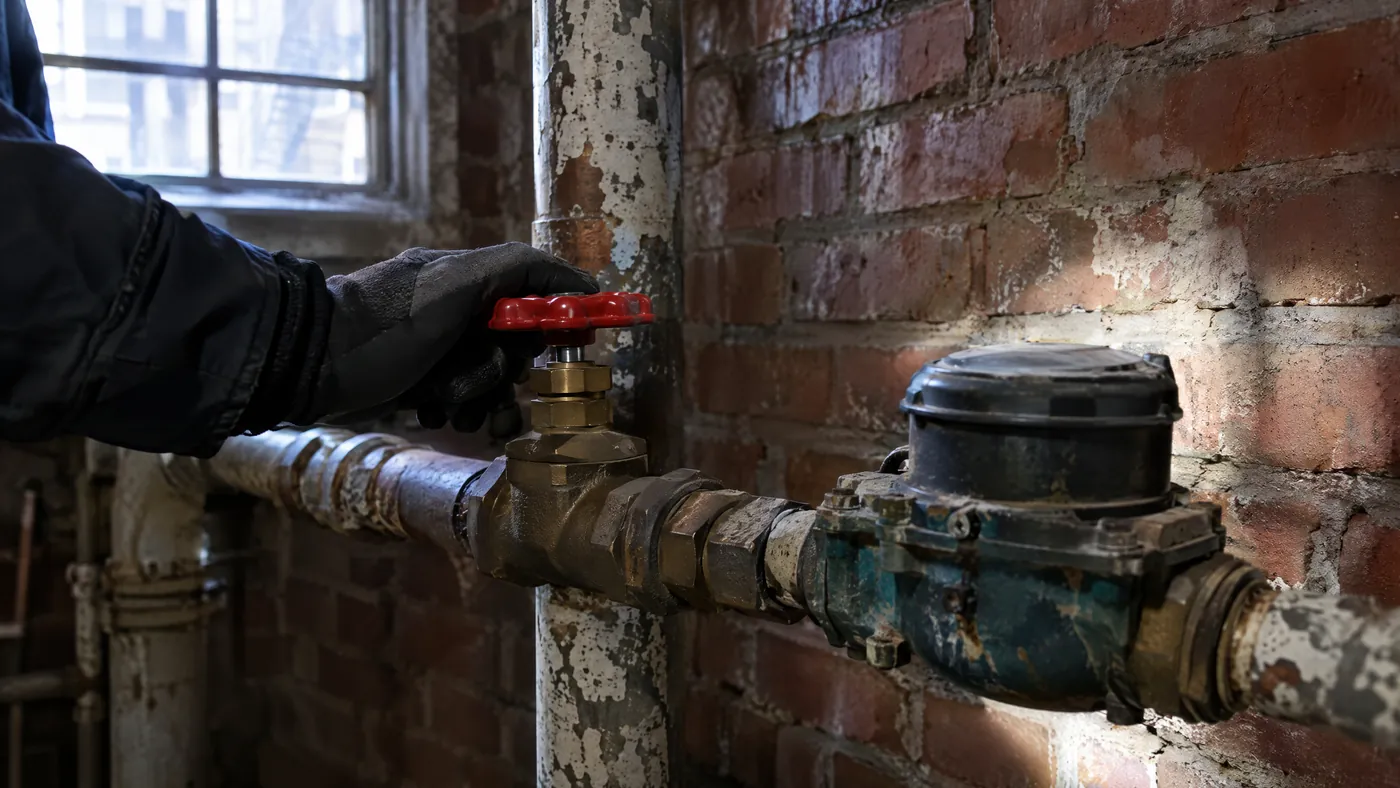
Where are the shut-off valves in Bronx buildings?
Bronx housing ranges from prewar walk-ups along the Grand Concourse and in Mott Haven to the big garden-apartment complex at Parkchester, two- and three-family houses in Morris Park and Throgs Neck, and co-ops and private homes in Riverdale. Where the valves are depends on the building.
Prewar walk-ups and larger multifamily buildings
In most older apartment buildings there is one main shut-off in the cellar where the service enters from the street, typically close to the water meter on the front wall. Water then goes up through risers, and each riser may have its own valve in the basement. Individual apartments often have no shut-off of their own beyond the fixture valves, and those are frequently old and seized.
That means a tenant in Fordham or Kingsbridge usually cannot stop a burst riser alone. The super has to shut the riser or main. Landlords should label every riser valve, exercise them once a year so they actually turn, and post the super's emergency number in the lobby.
One- to three-family houses
In a house in Pelham Bay or Throgs Neck, the main shut-off is usually in the basement near the meter, on the street side. There is often a valve on each side of the meter. Find yours now, before you need it, and make sure everyone in the house knows where it is. Do not try to operate the curb valve at the street; that is for the utility or a licensed plumber.
Frozen pipes in a Bronx winter
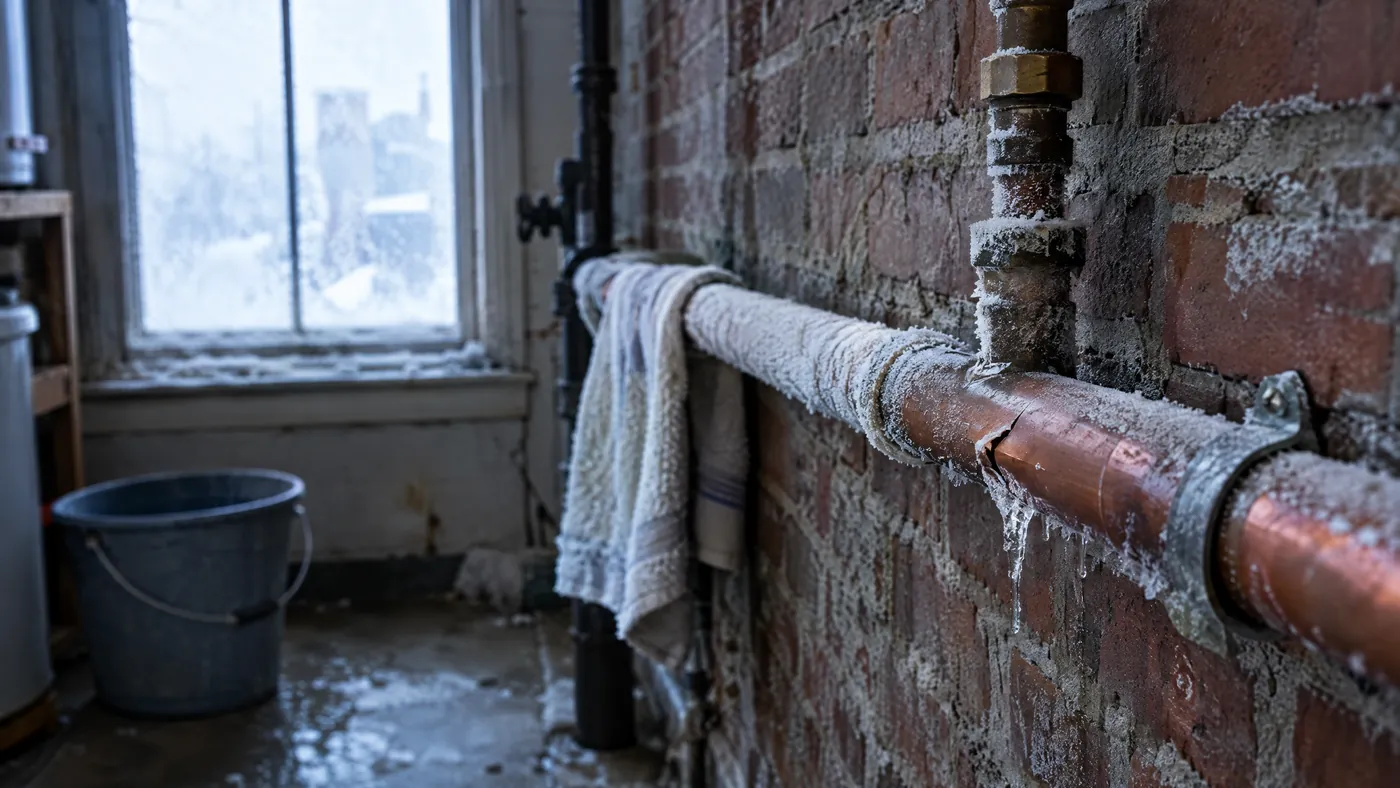
Frozen pipes are a classic Bronx winter call, especially in houses with plumbing along exterior walls, unheated porches and enclosed back additions, and in buildings where the heat fails during a cold snap.
Warning signs: a faucet that gives only a trickle on a very cold morning, frost on an exposed pipe, or a section of wall that feels ice-cold.
What to do:
- Shut the main water off before the pipe thaws, in case it has already split.
- Open the faucet on that line so melting water and steam can escape.
- Warm the area gently with a hair dryer or space heater kept well clear of anything flammable. Never use an open flame or torch.
- If you cannot find the frozen section, or the pipe is inside a wall, call a plumber.
Prevention is cheaper: insulate pipes in unheated spaces, seal drafts around pipe penetrations, keep cabinet doors open on cold nights, and drain hose bibs in the fall. NYC heat season runs October 1 to May 31, and a building that loses heat is at real risk of frozen lines, so report heat failures quickly.
Clogged main drain and the drain cleanout
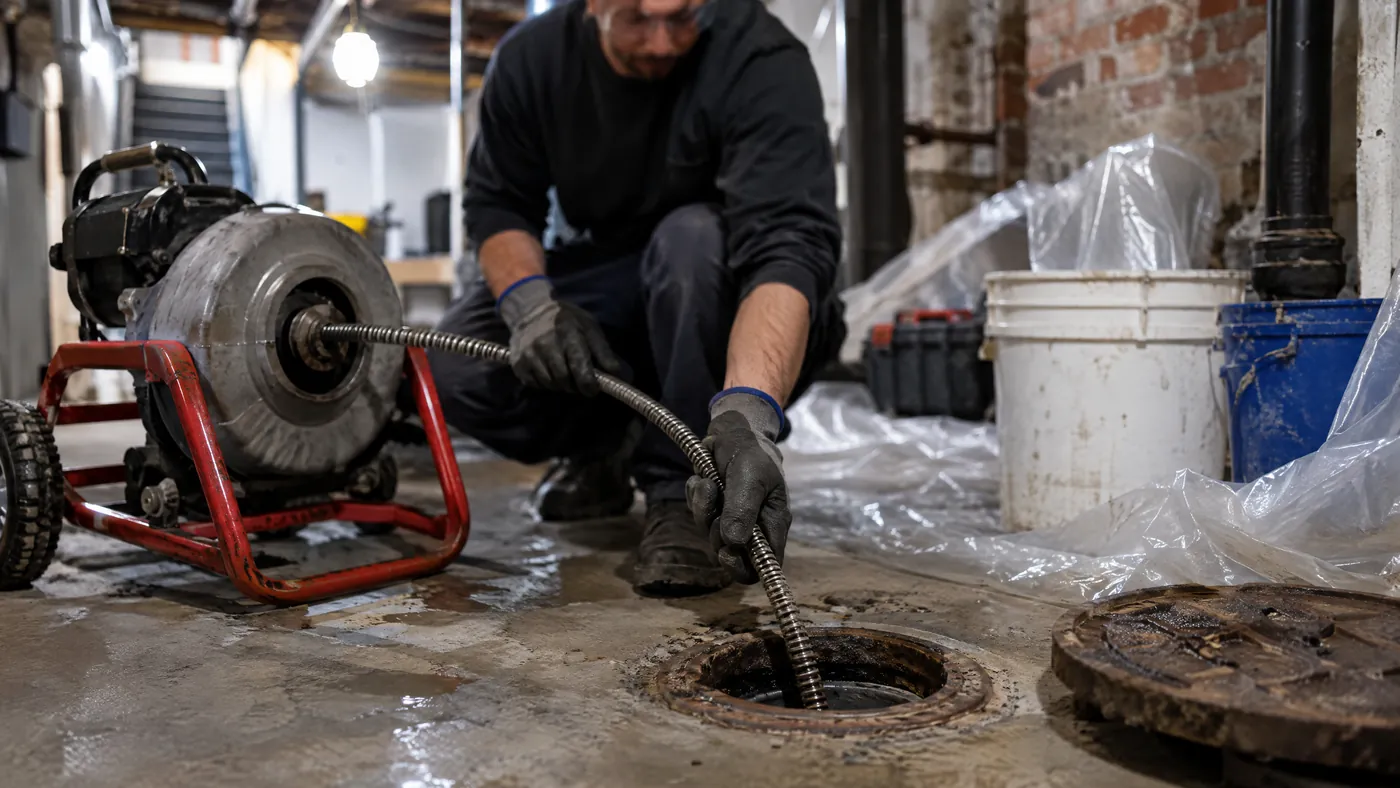
When several fixtures back up at once, or water comes up the basement floor drain when someone upstairs does laundry, the problem is usually the main building drain or the sewer line to the street, not an individual sink.
Most buildings have a drain cleanout: a capped fitting on the main drain, often in the basement floor or wall near the front of the building. It gives a plumber direct access to clear the line with a drain machine or water jet. Older Bronx buildings may also have a house trap with two cleanout caps.
A few practical points:
- Do not open a cleanout cap on a backed-up line yourself. The pressure of waste water behind it can release suddenly.
- Roots, grease, wipes and old cast-iron or clay pipe are the usual causes. Repeated clogs often mean the line needs a camera inspection.
- If the blockage is in the sewer line under the sidewalk or street, ask who is responsible before work starts. In NYC, the property owner is generally responsible for the sewer connection from the building to the city main.
Landlord vs tenant: who is responsible?
If you are a tenant
In a Bronx rental, the landlord is responsible for keeping plumbing, water supply and hot water in good repair. Your job is to report the problem quickly and in writing, and not to cause damage.
- Call or text the super or management company, then follow up in writing (text, email or the building's portal).
- Document the problem with photos, video and dates.
- If it is not fixed in a reasonable time, call 311 or file online with NYC HPD. HPD can inspect, issue violations and, for serious hazards like no water or no hot water, may make repairs through its Emergency Repair Program and bill the owner.
- Do not hire your own plumber and deduct it from rent without legal advice. It can backfire.
If you are a landlord or owner
Owners have a legal duty to repair, and plumbing complaints can turn into HPD violations fast. The best defense is a plan made before the emergency:
- Know every shut-off and riser valve, and make sure they work.
- Keep a list of who to call at night and on weekends.
- Inspect under sinks, around water heaters and in the cellar at regular intervals.
- Clear the main line on a schedule if the building has a history of backups.
- Keep photo records of repairs to answer complaints.
A home maintenance plan for landlords puts this on a schedule, with one number for tenants to call, emergency repairs, inspections and photos with every visit.
Quick reference: first action and who to call
| Emergency | First action | Who to call |
|---|---|---|
| Burst or leaking pipe | Close fixture valve or main shut-off | Super/landlord, then a plumber |
| Sewage backing up | Stop using all drains | Super/landlord, plumber for main line |
| No water | Check with neighbors; check for street work | Super/landlord; 311 if not fixed |
| No hot water | Check water heater or boiler status | Super/landlord; 311 to report to HPD |
| Frozen pipe | Shut main, open faucet, warm gently | Plumber if pipe is split or in a wall |
| Gas smell | Leave immediately, no switches or flames | 911 or Con Edison from outside |
| Water near electrical | Stay clear, cut breaker only if dry and safe | Super/landlord; 911 if sparking or smoking |
How much does an emergency plumber cost in NYC?
No two calls are the same, so treat these as rough NYC market estimates for 2026, not quotes. Prices vary by company, time of day, access and what is found once the wall or floor is open.
| Job | Typical NYC range (market estimate) |
|---|---|
| After-hours or same-day service/trip charge | $150–$350 |
| Clearing a single fixture clog | $200–$450 |
| Main line drain cleanout (snaking) | $300–$800 |
| Water jetting a main line | $500–$1,200+ |
| Repairing a burst or frozen pipe (accessible) | $300–$1,000 |
| Pipe repair inside a wall or ceiling | $800–$2,500+, plus wall repair |
| Camera inspection of a sewer line | $250–$600 |
What pushes the cost up:
- Time. Nights, weekends and holidays usually carry a higher rate or a minimum charge.
- Access. Pipes behind tile, in a ceiling or in a crawlspace take longer.
- Building type. Risers in a large prewar building and old galvanized or cast-iron pipe make simple repairs bigger.
- Permits. Some work needs a DOB permit and inspection, which adds time and fees.
- Follow-up repairs. Drywall, plaster, paint and flooring after the leak are separate costs.
Ask for the hourly rate, trip charge and minimum before the plumber starts, and get a written, itemized estimate for anything beyond the immediate fix.
What licensed plumbing work means in NYC
In New York City, plumbing work and all gas work must be done by or under a NYC licensed master plumber, and many jobs need a permit from the NYC Department of Buildings. That includes new piping, moving fixtures, water heater replacement and anything on a gas line.
Before you hire anyone for a plumbing emergency, ask for their master plumber license number and look it up with DOB, confirm they carry insurance, and for home improvement work over $200 check that the company holds a DCWP Home Improvement Contractor license. A "same day plumber near me" ad does not tell you any of that.
Around a plumbing emergency there is also plenty of work that is not plumbing: opening and closing walls, drying and repairing plaster, painting, flooring and replacing damaged cabinets. We can help with that side of the job through our plumbing, electrical and basement services, and coordinate so the repair and the restoration happen in the right order.
Get help in the Bronx
Whether you rent in Mott Haven, own a house in Morris Park or manage buildings near Fordham Road, the steps are the same: stop the water, document it, call the right people, and fix the cause so it does not happen again. We work across the borough; see our Bronx service area for neighborhoods we cover.
For repairs after a leak, plumbing-related work and maintenance plans, call or text 929-400-9900, or request a free estimate. Our crews speak English, Spanish, Bengali, Hindi and Urdu, and we can book nights and holidays by appointment. For emergency plumbing repairs that need fast attention, tell us what happened and we will tell you honestly what can wait and what cannot.