Water Damage Repair in NYC: What to Do in the First 48 Hours
If your New York City home just took on water, the first 48 hours decide how big the bill gets. Stop the water at its source, make the space electrically safe, photograph everything for insurance, and get the area extracted and drying within 24 to 48 hours, before mold has a chance to start.
Below is that plan hour by hour, plain-English insurance basics, and what changes in apartments, co-ops and two-family houses in Queens, Brooklyn and the Bronx.
What should you do first when water damage happens?
The order matters. Towels do nothing while water is still flowing.
- Stop the water. Close the fixture valve if the leak is at a toilet, sink, dishwasher or washing machine. If you cannot find it or the leak is in a wall or ceiling, close the main shut-off.
- Make it electrically safe. If water is near outlets, a panel, baseboard heaters or extension cords, shut off power to that area at the breaker panel, but only if you can reach the panel without standing in water.
- Get people and pets out of the wet area, especially if a ceiling is sagging.
- Document before you clean. Photos and video of the source, the water, and every damaged item.
- Call for help. Your super or landlord if you rent, the upstairs neighbor if that is the source, a plumber if the leak is in your own pipes, and your insurer.
Finding the main water shut-off in an NYC home
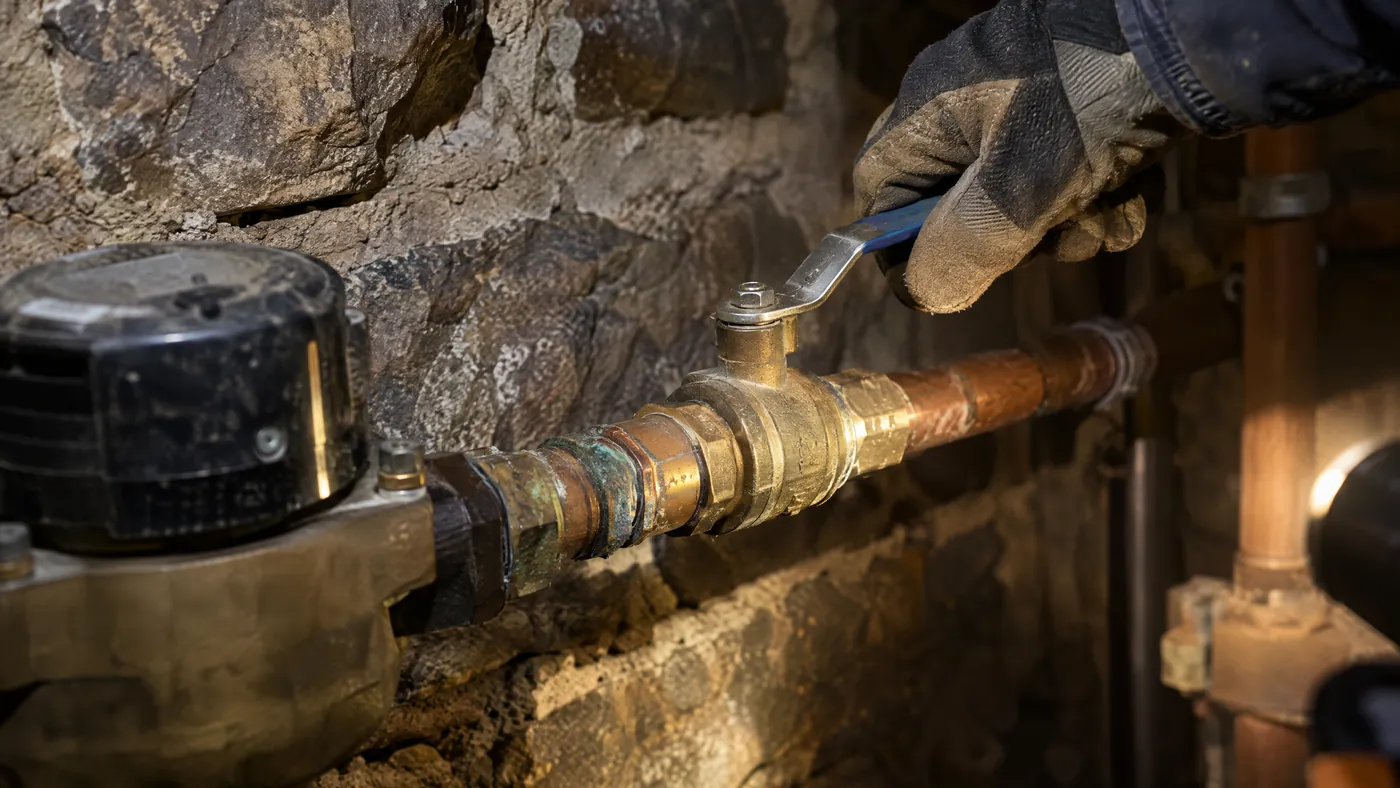
In most Queens and Brooklyn one- and two-family houses, the main shut-off sits in the basement or cellar on the front wall facing the street, right next to the water meter. There is usually one valve on each side of the meter. Turn the house-side valve clockwise, or a quarter turn if it is a lever-style ball valve.
In apartment buildings, tenants usually cannot reach the main. Look for shut-off valves under the sink and behind the toilet, and find out now where your super keeps the riser valves. Old gate valves in prewar Bronx and Brooklyn buildings often seize up, so do not force one hard enough to snap the stem.
Electricity and water
Never walk into standing water if outlets, cords or appliances in it may still be live. If the water has reached your electrical panel, or you smell burning or hear buzzing, leave the area and call Con Edison or 911. Do not plug in or turn on anything that got wet until it has been checked. Electrical repairs in NYC require a licensed electrician, so a soaked outlet or panel is not a DIY job.
Water damage timeline: what to do hour by hour
Here is a practical schedule for the first two days. It assumes clean water from a supply line, a radiator or rain. Sewage or floodwater changes the plan, which we cover further down.
| Time since the leak | What to do | Why it matters |
|---|---|---|
| 0 to 1 hour | Stop the source, cut power to wet areas, move people and valuables out | Every minute of flow adds gallons into floors and walls |
| 1 to 3 hours | Photograph and video everything, then remove standing water with a wet vac, mop or pump | Insurers want to see the damage before cleanup begins |
| 3 to 6 hours | Call your insurer to open a claim; notify landlord, board or neighbor in writing | Most policies require prompt notice of a loss |
| 6 to 12 hours | Pull up wet area rugs and carpet padding; move furniture onto blocks; open closets and cabinets | Padding holds water like a sponge and is rarely worth saving |
| 12 to 24 hours | Run fans and a dehumidifier around the clock; keep windows closed if it is humid outside | Air movement plus dry air is what actually dries a room |
| 24 to 48 hours | Check walls and floors with a moisture meter; cut out drywall and insulation that is still soaked | Mold can begin on wet materials within about 24 to 48 hours |
| After 48 hours | Keep drying until readings are normal; get written repair estimates; save every receipt | Closing walls over damp framing is how hidden mold starts |
How to document water damage for insurance
Good documentation is what gets claims paid. Before you move or throw anything away:
- Take wide shots of each room, then close-ups of the source, the waterline on walls and damaged items.
- Shoot a slow video walkthrough while narrating what you see.
- Keep samples of damaged flooring or carpet if your insurer may want an adjuster to see them, or photograph them with a tape measure for scale.
- Write down the date and time you discovered the leak and every call you made.
- Save receipts for fans, dehumidifier rentals, a hotel stay and emergency plumbing. Many policies reimburse reasonable steps you take to prevent further damage.
Drying things out does not hurt your claim. Throwing out evidence before it is recorded can.
Does homeowners insurance cover water damage from rain?
This is one of the fastest-growing searches on the topic in New York, and the honest answer is: it depends on how the water got in. Policies vary a lot, so treat the following as general patterns, not a promise of coverage. Always read your own policy and ask your agent.
Sudden and accidental damage
Many standard homeowners policies cover water damage that is sudden and accidental. Think of a supply line that bursts, a water heater that ruptures, or a pipe that freezes and splits during a cold snap. Rain that comes in because a storm tore off flashing or a tree branch punched through the roof is often treated the same way.
Gradual leaks and maintenance issues
Damage that built up over weeks or months, like a slow drip under a vanity, a toilet seal that leaked for a year, or a roof that was already worn out, is commonly excluded. Insurers usually see it as a maintenance problem. This is why a stain that has been "there for a while" is hard to claim.
Flooding and surface water
Water that comes in from outside at ground level, such as a flooded street, overflowing yard or rising water in a basement after a heavy storm, is generally considered flood. Standard homeowners policies typically exclude flood, and it generally needs a separate flood insurance policy. Sewer or drain backup is another common exclusion that some insurers offer as an add-on endorsement.
If you deal with recurring water in a basement, our guide to wet basement waterproofing in southeast Queens explains how to diagnose the source and what the fixes cost.
Leak from the apartment upstairs: who is responsible?
Apartment and co-op leaks are a daily fact of life in New York. Who handles what usually depends on what kind of building you live in.
Renters
If you rent, your landlord is generally responsible for fixing the leak, repairing the building's walls, ceilings and floors, and dealing with any resulting mold. Report the problem to your landlord or super in writing, with photos, and keep a copy. If repairs do not happen, tenants can call 311 to file a complaint with NYC Housing Preservation and Development (HPD), which can inspect and issue violations. Your furniture, clothes and electronics are usually not the landlord's responsibility, which is what renters insurance is for.
Co-op and condo owners
In co-ops, the proprietary lease and house rules usually split responsibility. The building often handles pipes inside walls and common risers, while the shareholder handles fixtures and finishes inside the unit. In condos, the bylaws decide. Either way, notify the managing agent right away, and expect that repair work inside your unit may need board approval or an alteration agreement before it starts.
Small landlords and two-family owners
If you own a two-family house in Jamaica, Canarsie or Throggs Neck and a leak in the upstairs unit soaks the apartment below, you are both the owner and the landlord. Fix the source first, dry both units, and keep the tenant informed in writing. Owners who would rather have one number for tenant calls and emergency repairs often use a home maintenance plan for landlords.
Should you replace drywall and flooring after water damage?
Not everything that got wet has to go, but some materials almost never recover.
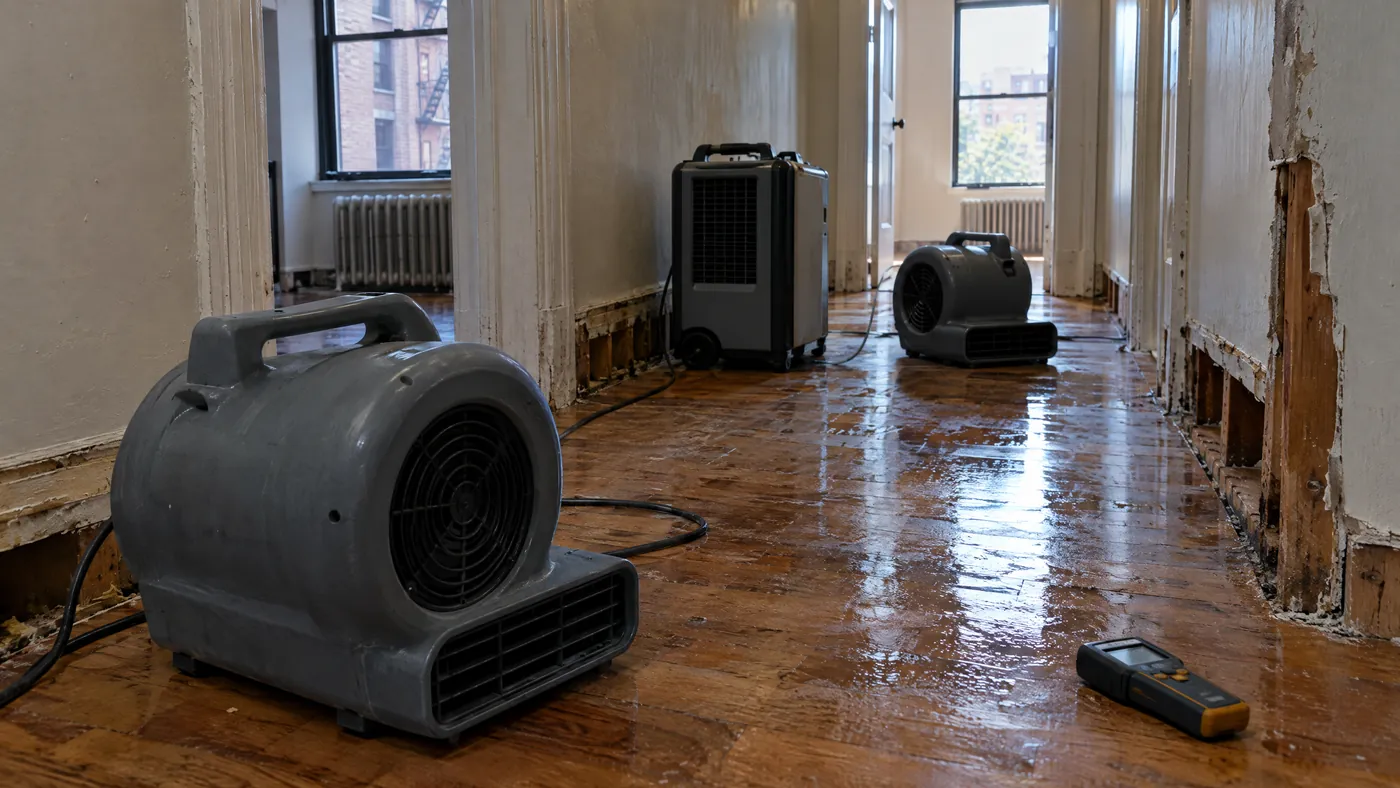
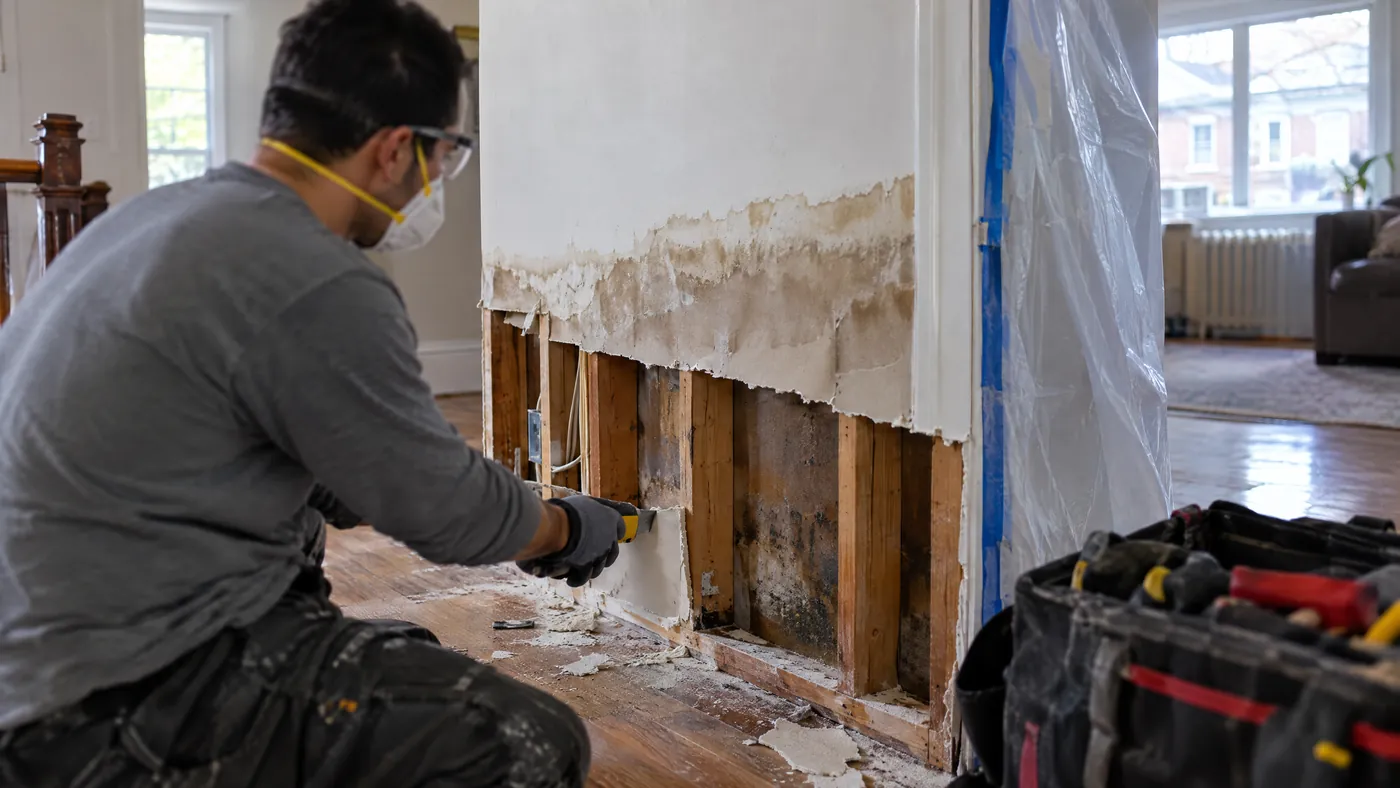
Drywall: If clean water wet it briefly and it dries within a day or two without sagging, drywall can sometimes stay. If it is soft, swollen, stained through, or the insulation behind it is soaked, the usual fix is a flood cut, which means removing the lower 2 to 4 feet so the wall cavity can dry.
Hardwood: Solid oak strip floors often cup when wet, then flatten again as they dry over a few weeks. Do not sand or refinish too early.
Laminate and vinyl plank: Water trapped under floating floors is hard to dry. Laminate that has swollen at the seams usually needs replacing. Vinyl plank may survive if it can be lifted and the subfloor dried.
Carpet: Padding should almost always be thrown out. Carpet itself can sometimes be cleaned and dried if it was clean water and you act within about a day.
Anything touched by sewage or floodwater: Porous materials such as drywall, insulation, carpet and upholstered furniture should generally be removed and discarded, not dried.
When we open up a wet wall, we always check the framing and subfloor with a moisture meter before anything gets closed back up. A wall that looks dry on the surface can still be wet inside.
How to prevent mold after water damage
Mold needs moisture, food and time. You cannot remove the food, since drywall paper and wood are perfect for it, so the goal is to take away moisture fast.
- Keep indoor humidity below about 50 percent with a dehumidifier while things dry.
- Remove soaked porous materials rather than hoping they dry.
- Clean hard surfaces with detergent and water, then dry them completely.
- Do not paint over water stains until the source is fixed and the wall is dry.
- Run bathroom and kitchen exhaust fans, and keep checking hidden areas like under sinks and behind baseboards for a few weeks.
NYC mold rules in general terms
In New York City, Local Law 55 requires landlords of buildings with three or more apartments to address indoor allergen hazards, including mold, as well as the underlying moisture that causes it. That generally means investigating complaints, fixing leaks, and correcting mold using safe work practices. Tenants who cannot get a landlord to act can report mold to 311. Separately, New York State has licensing rules for companies that do mold assessment and larger remediation jobs, so ask any mold removal contractor in NY about theirs.
Large dark patches, a musty smell that lingers, or mold returning after cleaning all mean moisture is still getting in somewhere.
When to call a pro for water damage restoration in New York
Some cleanups are well within a homeowner's reach. Bring in help when:
- The leak is inside a wall, under a floor, or from a pipe you cannot reach or shut off.
- Water reached electrical wiring, the panel, or a boiler or water heater.
- The water came from a sewer backup, toilet overflow with waste, or outside floodwater.
- Ceilings are sagging, or more than one room is affected.
- You still have damp readings or a musty smell after two or three days of drying.
Plumbing repairs in New York City need a licensed master plumber, and many jobs need Department of Buildings permits. Before hiring anyone for repairs, check that the contractor holds a NYC Department of Consumer and Worker Protection Home Improvement Contractor license and carries insurance. Ask for a written, itemized estimate that separates emergency drying, demolition and rebuilding.
Our crews handle plumbing and water damage repair across Queens, Brooklyn and the Bronx, from fixing the leak to replacing drywall, flooring and paint once everything is dry. We work in English, Spanish, Bengali, Hindi and Urdu, which helps when a tenant, owner and insurer all need to be on the same page.
Get help with water damage repair
If you are dealing with a leak right now, shut off the water, stay away from anything electrical in the wet area, and start taking photos. When you are ready to plan repairs, request a free water damage repair estimate or call or text 929-400-9900. We are open Monday to Friday 8am to 7pm, Saturday 9am to 6pm and Sunday 10am to 4pm, and nights and holidays are available by appointment. You can also read more about our electrical, plumbing and basement services.