Basement Waterproofing in Southeast Queens: Causes, Fixes and Costs
A wet basement in southeast Queens usually comes from one of four things: condensation, rainwater seeping through the foundation, high groundwater pushing up from below, or sewer backup during heavy storms. The right basement waterproofing fix depends on which one you have, and the cheapest options, like gutters and grading, are worth trying before you pay for drainage systems or excavation.
This guide explains why basements in Jamaica, Hollis, St. Albans and nearby neighborhoods take on water, how to diagnose the source, what each fix typically costs in New York City, and when to call a basement waterproofing company.
Why do so many basements in southeast Queens get wet?
Homeowners in Jamaica, South Jamaica, Hollis, St. Albans, Cambria Heights, Springfield Gardens, Laurelton, Rosedale and Queens Village often trade the same stories about sump pumps running in July and damp carpet every spring. There are real, well-known reasons for it.
High groundwater
High groundwater has been a long-documented issue in parts of southeast Queens. For much of the 20th century, wells in the area were pumped for drinking water, which kept the water table low. After that pumping ended, groundwater rose in many neighborhoods, and some basements built during the low-water years now sit closer to it than their builders expected. It does not affect every block, and levels vary with the season and rainfall.
Heavy rain and flash flooding
Summer downpours can drop more rain in an hour than streets and sewers can carry away. Low spots, driveways that slope toward the house, and basement stairwells with clogged drains all collect water fast. Many people in Queens still remember the remnants of Hurricane Ida in September 2021, but you do not need a historic storm to get a wet basement. An ordinary cloudburst with full gutters can do it.
Sewer backup
When combined sewers fill during intense rain, water can push back up through the lowest drains in a building, which is usually a basement floor drain, toilet or laundry sink. The city has been investing heavily in new storm sewers in southeast Queens, but individual homes still benefit from their own protection.
Older foundations
Much of the housing stock here is detached and semi-attached homes from the early and mid-1900s, with poured concrete or block foundations. After decades, mortar joints wear, small cracks open, and original exterior damp-proofing breaks down.
How to tell what is causing your wet basement
Before anyone sells you a system, figure out the source. Watch when the water shows up and where.
| Source | What you usually see | When it happens |
|---|---|---|
| Condensation | Beads of water on cold walls, pipes and floors; musty smell; no puddles at the base | Humid summer days, dryer venting indoors |
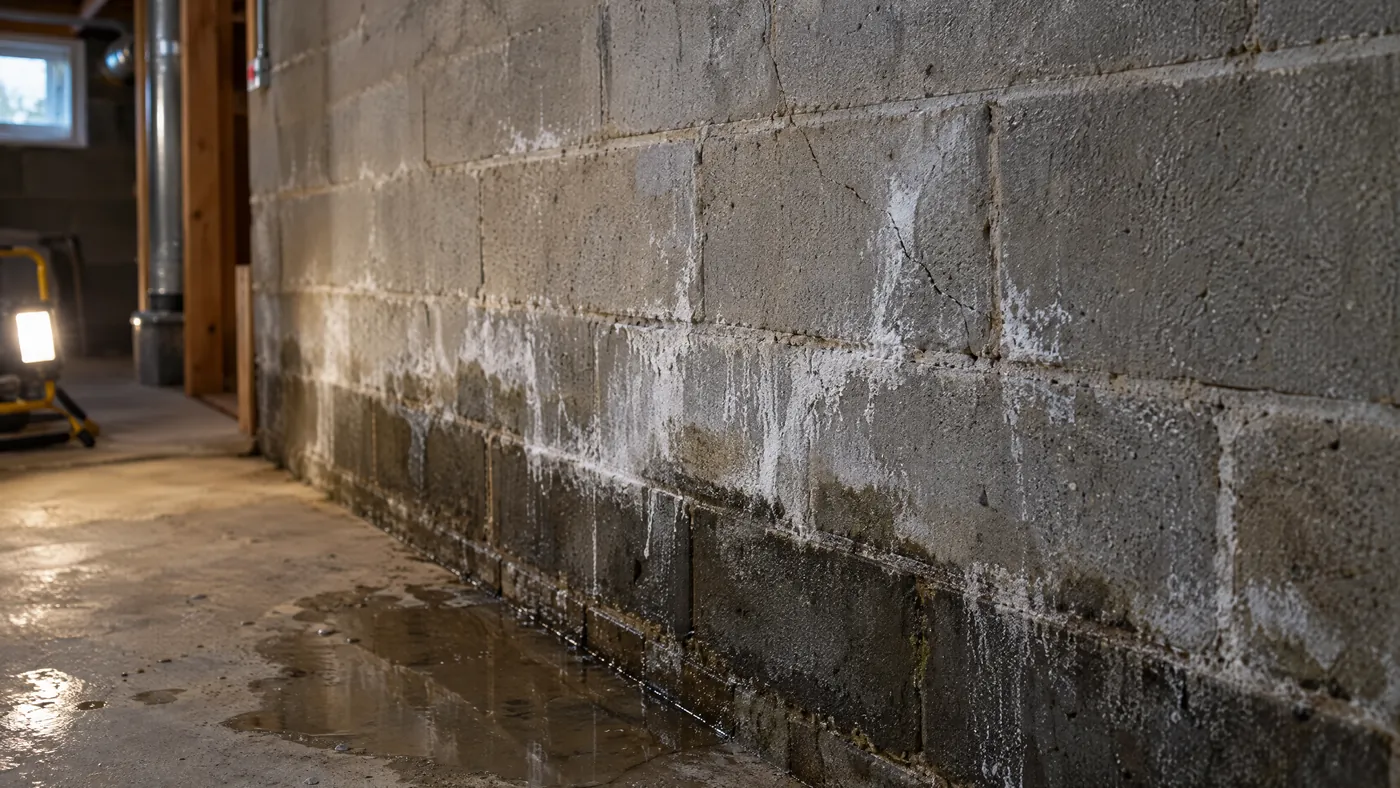
| Seepage through walls | Damp patches, white chalky efflorescence, water at cracks or the wall-floor joint | During or a day after heavy rain |
| Hydrostatic pressure (groundwater) | Water rising through the floor slab or the joint where floor meets wall, even in dry weather | Spring, wet seasons, or constantly in some areas |
| Sewer backup | Dirty, smelly water coming up from floor drains, toilets or sinks | During intense rainstorms |
| Plumbing leak | Water near a specific pipe, meter or water heater; meter moving with fixtures off | Any time |
The foil test
Tape a square of aluminum foil, about a foot across, tightly to a damp section of wall and leave it for 24 to 48 hours. If moisture forms on the outside of the foil, it is condensation from humid air. If it forms underneath, against the wall, water is coming through the foundation.
Check the water meter
Turn off every fixture and look at your water meter. If the dial is still moving, you have a supply leak somewhere, and no amount of waterproofing will fix it. That is a plumbing repair first.
If water is already standing in your basement, start with our guide on what to do in the first 48 hours after water damage, then come back to the long-term fix.
Basement waterproofing options, from cheapest to biggest
Work from the outside in and from cheap to expensive. Many wet basements are fixed in the first two steps.
- Clean gutters and extend downspouts. A downspout dumping right at the foundation sends hundreds of gallons into the soil next to your basement wall in a single storm. Extensions or underground leaders that carry water at least 4 to 6 feet away are the most affordable basement waterproofing step there is.
- Regrade the soil. Ground should slope away from the house. In many Queens yards, years of settling, new patios or raised planting beds have created a slope back toward the foundation.
- Seal window wells and stairwells. Add covers to window wells and make sure exterior stairwell drains are clear and working.
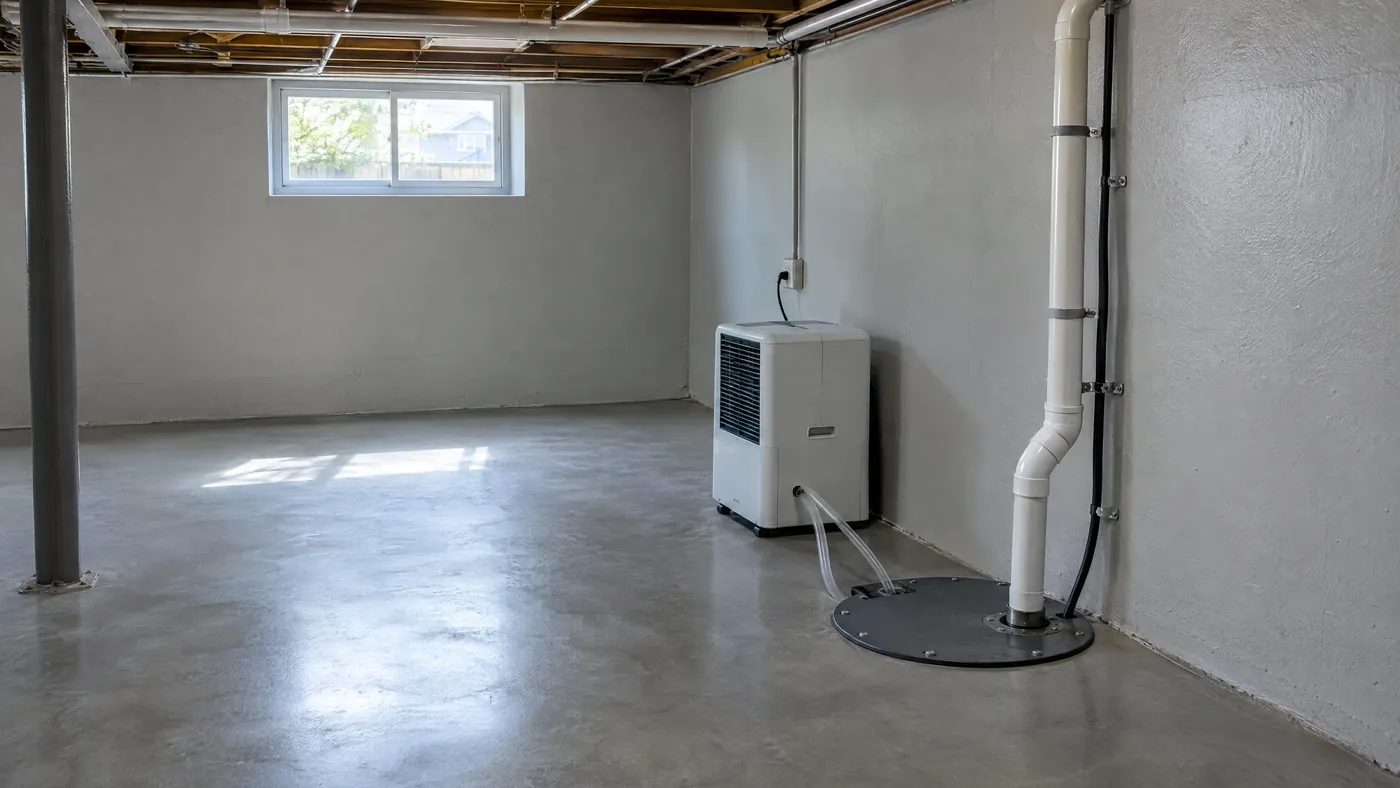
- Control humidity. If the problem is condensation, a properly sized dehumidifier, insulated cold water pipes and venting the dryer outdoors may be all you need.
- Inject foundation cracks. For poured concrete walls with a few leaking cracks, injecting polyurethane or epoxy from the inside can seal them for a fraction of the cost of a full system.
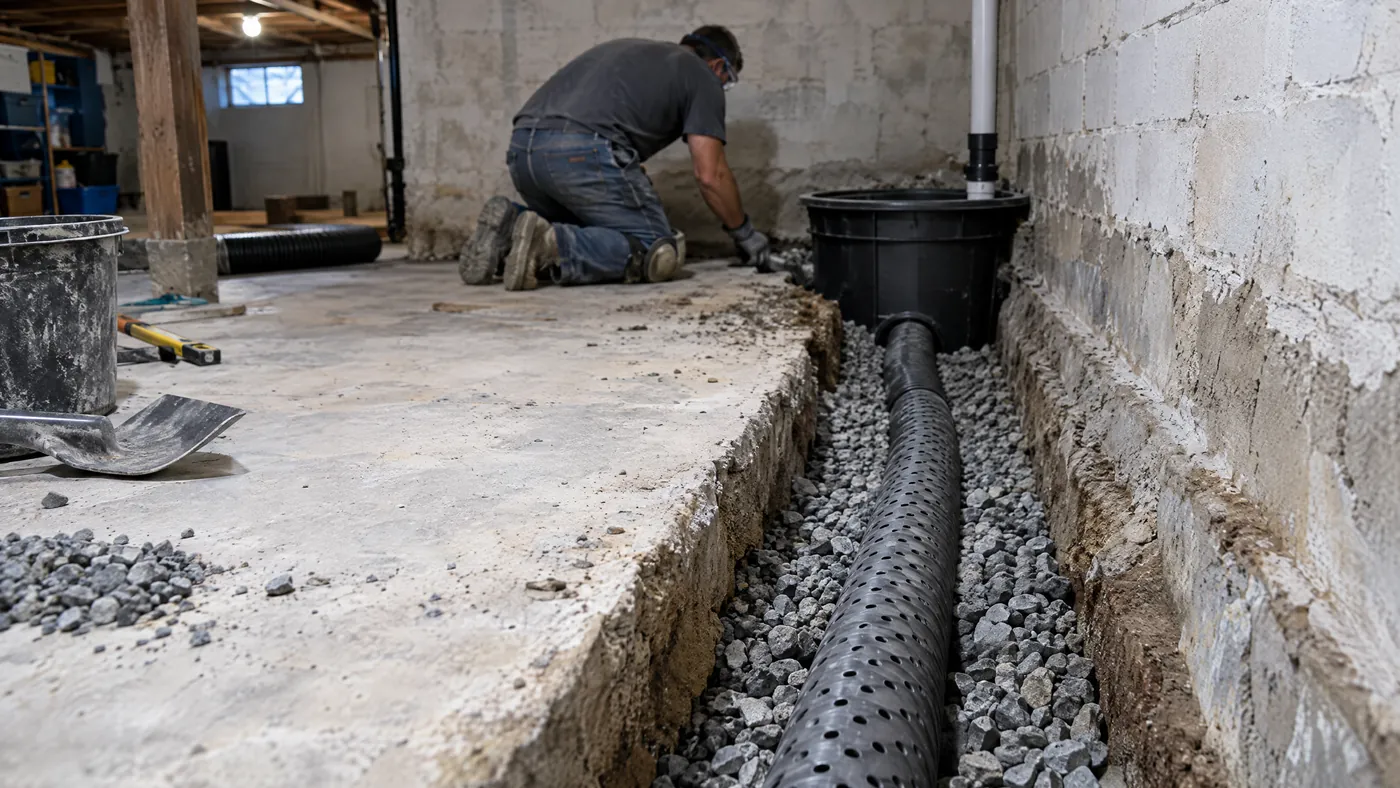
- Install interior drainage and a sump pump. For groundwater and hydrostatic pressure, the usual answer is a perimeter drain cut into the floor along the walls, leading to a sump pit with a pump that discharges outside. This manages the water rather than trying to block it.
- Excavate and apply an exterior membrane. Digging down to the footing, repairing the wall and applying a waterproof membrane with new footing drains stops water at the source. It is the most disruptive option and is hard on attached and semi-attached houses with tight side yards.
- Add a backwater valve. If you get sewer backup, a backwater valve on the building sewer line lets sewage flow out but closes when the city sewer surcharges. This is plumbing work that requires a NYC licensed master plumber and generally a Department of Buildings permit.
Interior sealer paints can help with minor dampness, but they will not hold back groundwater under pressure. Be skeptical of anyone who promises a paint-on fix for water coming up through the floor.
How much does basement waterproofing cost in Queens?
These are typical New York City market ranges in 2026 for a single- or two-family house. Actual prices vary by the size of the basement, wall type, access, how much finished space has to be removed and restored, permits, and where the pump can discharge. Treat them as a starting point for comparing written estimates for basement waterproofing and drainage work.
| Fix | Typical NYC cost range (2026) | Best for |
|---|---|---|
| Gutter cleaning and downspout extensions | $150 to $800 | Seepage after rain |
| Regrading soil around the foundation | $500 to $3,000 | Seepage after rain |
| Dehumidifier (purchase and setup) | $250 to $600 | Condensation |
| Crack injection | $400 to $1,200 per crack | Leaking cracks in poured walls |
| Sump pump only (new pit and pump) | $1,500 to $4,000 | Water rising in one area |
| Interior perimeter drainage and sump pump | $6,000 to $15,000 or more | Groundwater and hydrostatic pressure |
| Exterior excavation and membrane | $15,000 to $35,000 or more | Severe seepage where access allows |
| Backwater valve installation | $2,000 to $6,000 including permit work | Sewer backup |
What pushes costs up: finished basements where drywall and flooring must come out, block walls that need extra drainage, limited access for excavation, rock or tree roots, and electrical work for pumps. A battery backup for your sump pump adds cost but matters, because heavy storms are exactly when power goes out.
Basement apartments: a caution for owners
Many homes in southeast Queens have basement or cellar spaces that have been finished over the years. In New York City, a basement or cellar can only be legally rented as a home if it meets Department of Buildings and Housing Maintenance Code requirements for ceiling height, light, ventilation, exits and more, and many cellars cannot be legal apartments at all. Waterproofing a space does not make it a legal unit.
If you rent out any part of your home, water problems and flood risk below grade are a serious safety issue for the people living there, not just a maintenance item. Check the NYC Department of Buildings or a qualified professional before building out or renting a lower level. Landlords who want regular inspections, seasonal maintenance and one number for tenants can look at our home maintenance plans for landlords.
What NYC DEP advises homeowners
The NYC Department of Environmental Protection manages the city's sewers and offers general guidance to homeowners on reducing flood and sewer backup risk. The main points are practical:
- Keep grease, wipes and other debris out of drains, since they clog both your line and city sewers.
- Consider a backwater valve if your home has had sewer backup, installed by a licensed plumber.
- Keep gutters, downspouts, area drains and catch basins near your house clear.
- Store valuables and important papers off the basement floor.
- Report sewer backups, clogged catch basins and street flooding to 311.
DEP and the city also publish flood risk maps and other resources, which are worth checking before you finish a basement.
When to call a basement waterproofing company
You can handle gutters, extensions and a dehumidifier yourself. Call a pro when water comes up through the floor, appears in dry weather, returns after you have fixed the drainage, comes back up through drains, or when cracks are growing or the wall is bowing.
When we look at a wet basement, we start outside with the gutters, the grade and the downspouts before we ever talk about drainage systems. Inside, we check the meter, look at where the water stains are and ask when the water shows up.
Whoever you hire, verify that the contractor holds a NYC Department of Consumer and Worker Protection Home Improvement Contractor license and carries insurance, and that any plumber doing a backwater valve or sewer work is a NYC licensed master plumber. Get two or three written, itemized estimates that name the cause they are fixing, not just the product they are selling. Our basement waterproofing and plumbing services cover homes across Queens, from Jamaica and Hollis to Laurelton and Rosedale.
Get a free basement waterproofing estimate
If your basement in southeast Queens is damp, flooding or smelling musty, start with the cheap fixes, then get the source diagnosed before spending on a system. To have someone look at it, request a free basement waterproofing estimate or call or text 929-400-9900. Our crews speak English, Spanish, Bengali, Hindi and Urdu, and we are open seven days a week, with nights and holidays by appointment.