Hiring a Handyman for Your Manhattan Apartment: Rates, Rules and Limits
A good handyman can handle most of the small jobs in a Manhattan apartment: painting, patching walls, hanging TVs and shelves, assembling furniture, caulking, and adjusting doors and cabinets. What a handyman should not do is plumbing, gas or electrical work, which NYC requires licensed trades to perform. Expect to pay roughly $75 to $150 an hour in NYC, and expect your building to ask for insurance paperwork before anyone walks in.
Here is how to get the most out of a visit, stay on the right side of your co-op or condo, and know when to call someone else.
What can a handyman do in a Manhattan apartment?
Most handyman services in Manhattan fall into a handful of categories. These are the jobs that fill a typical half-day or full-day visit in an apartment on the Upper West Side, Murray Hill or Washington Heights.
- Painting. Touch-ups after a move, an accent wall, or full rooms including ceilings and trim. A good residential painter handles prep, not just rolling.
- Walls and ceilings. Patching nail holes, drywall dents, cracked plaster and water-stained ceilings once the leak is fixed.
- Mounting and hanging. TVs, floating shelves, mirrors, art, curtain rods, blinds and closet systems.
- Furniture assembly. Beds, dressers, desks, wardrobes and shelving units, including anchoring tall pieces to the wall.
- Caulking and sealing. Tubs, showers, backsplashes and windows.
- Doors and cabinets. Sticking doors, loose hinges, misaligned cabinet doors, new knobs and pulls, door sweeps.
- Minor flooring repairs. Replacing a few damaged vinyl planks, re-gluing loose tiles, fixing squeaks and transitions, installing shoe molding.
- Small fixes. Weatherstripping, replacing outlet covers and vent grilles, fixing towel bars and toilet paper holders.
Our painting, flooring and repair work covers this kind of list, from a single wall to a full apartment refresh between tenants.
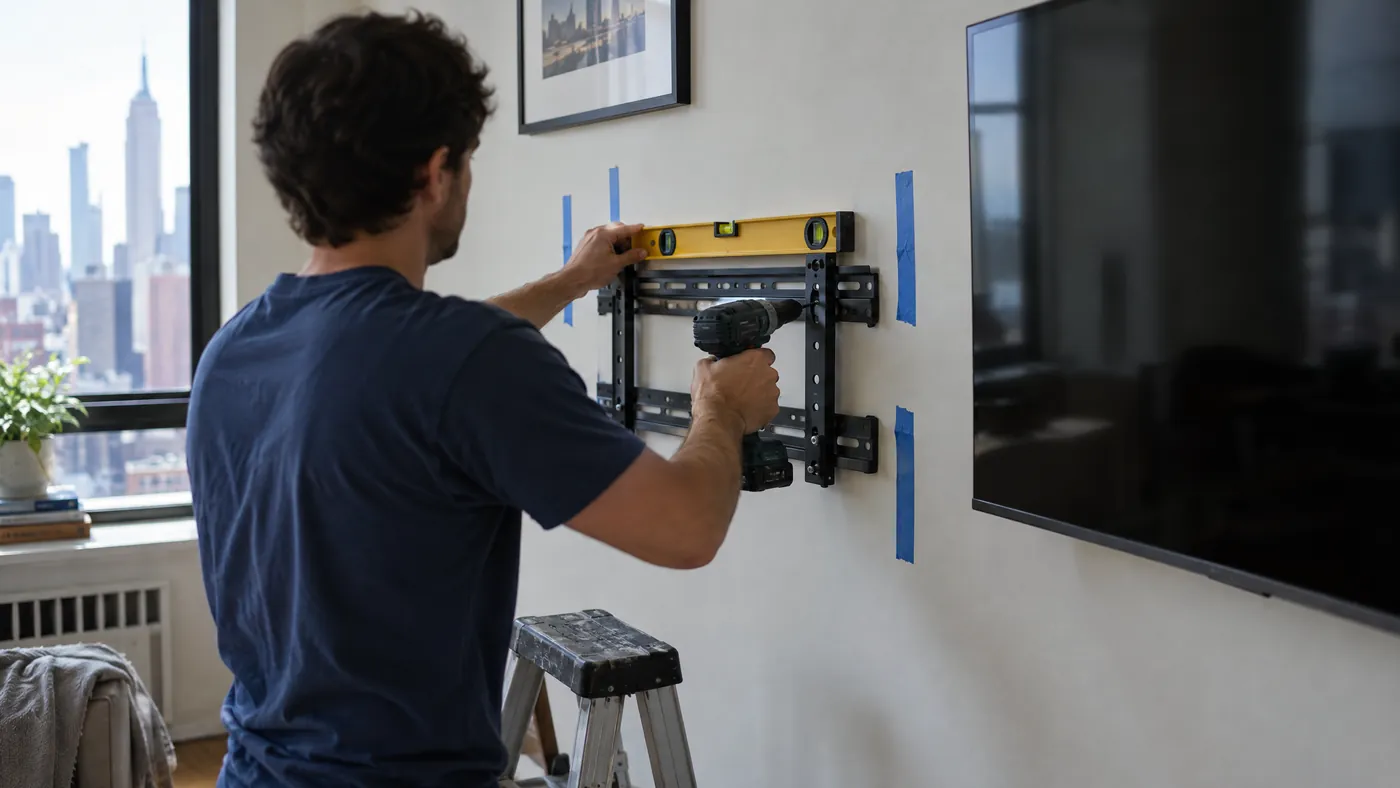
What needs a licensed pro instead of a handyman in NYC?
New York City is stricter than most places about who can do what. Knowing the lines saves you from a failed inspection, a board complaint or an insurance problem later.
Plumbing and gas
Plumbing and gas work in NYC must be done by a licensed master plumber, and many jobs also need a Department of Buildings permit. That includes moving or adding fixtures, replacing a water heater, and anything touching a gas line, including connecting a gas stove. A handyman can caulk a tub or replace a toilet seat, but not reroute pipes.
Electrical work
Electrical work in NYC requires a licensed electrician. Adding circuits, running new wiring, adding outlets or switches, and panel work are clearly electrician jobs.
The common question is whether you can hire a handyman to install a ceiling fan or swap a light fixture. Even replacing a fixture on an existing box can count as regulated electrical work in NYC, and nearly every co-op and condo requires a licensed electrician for anything wired. Our advice: use a licensed electrician for ceiling fans and fixtures. A handyman can assemble the fan, move furniture, and patch and paint the ceiling afterward.
Home improvement contractor licensing
Separately, anyone doing home improvement work on a residential property in NYC generally needs a Home Improvement Contractor license from the Department of Consumer and Worker Protection (DCWP) for jobs over $200. That covers a lot of what people call handyman work, like painting rooms or replacing flooring. You can check a contractor's license on the DCWP website or through 311, and you should ask for proof of insurance too.
| Job | Who should do it in NYC |
|---|---|
| Painting, patching, caulking | Handyman or residential painter |
| Hanging TVs, shelves, art; furniture assembly | Handyman |
| Minor flooring repairs | Handyman or flooring installer |
| Replacing a light fixture or ceiling fan | Licensed electrician |
| New outlets, circuits or wiring | Licensed electrician, often with a permit |
| Moving a sink, toilet or shower; water heater | Licensed master plumber, usually with a permit |
| Anything involving gas | Licensed master plumber |
| Removing walls, kitchen or bathroom remodel | General contractor; board approval and often DOB filing |
Co-op and condo rules: what your building will ask for
In Manhattan, your building often has as much say as the city. Whether you're in a prewar co-op in Greenwich Village or a doorman condo in Chelsea, expect most of the following.
- Certificate of insurance. Management will usually want a certificate of insurance (COI) naming the building's corporation or condo association and the managing agent as additional insureds, with specific liability limits. Send your building's requirements to the contractor early, because getting the COI issued can take a few days.
- Work hours. Many buildings allow contractor work only on weekdays, often 9am to 5pm, with no work on weekends or holidays. Some start at 8:30 or end at 4:30. Noisy work like drilling may have tighter windows.
- Freight elevator booking. Contractors may have to use the service entrance and freight elevator, which you often have to reserve with the super or doorman in advance. Ask about elevator padding and floor protection requirements.
- Notice to the super. Tell the super or front desk who is coming and when. Some buildings want names in advance.
- Alteration agreement for bigger jobs. Painting and small repairs usually just need the COI. Flooring replacement, kitchens, bathrooms and anything involving plumbing or electrical typically need board approval, plans and a signed alteration agreement, sometimes with a deposit.
If you're planning something larger, our guide to a small bathroom remodel in Brooklyn walks through how co-op alteration agreements and board approvals work. The process is very similar in Manhattan buildings.
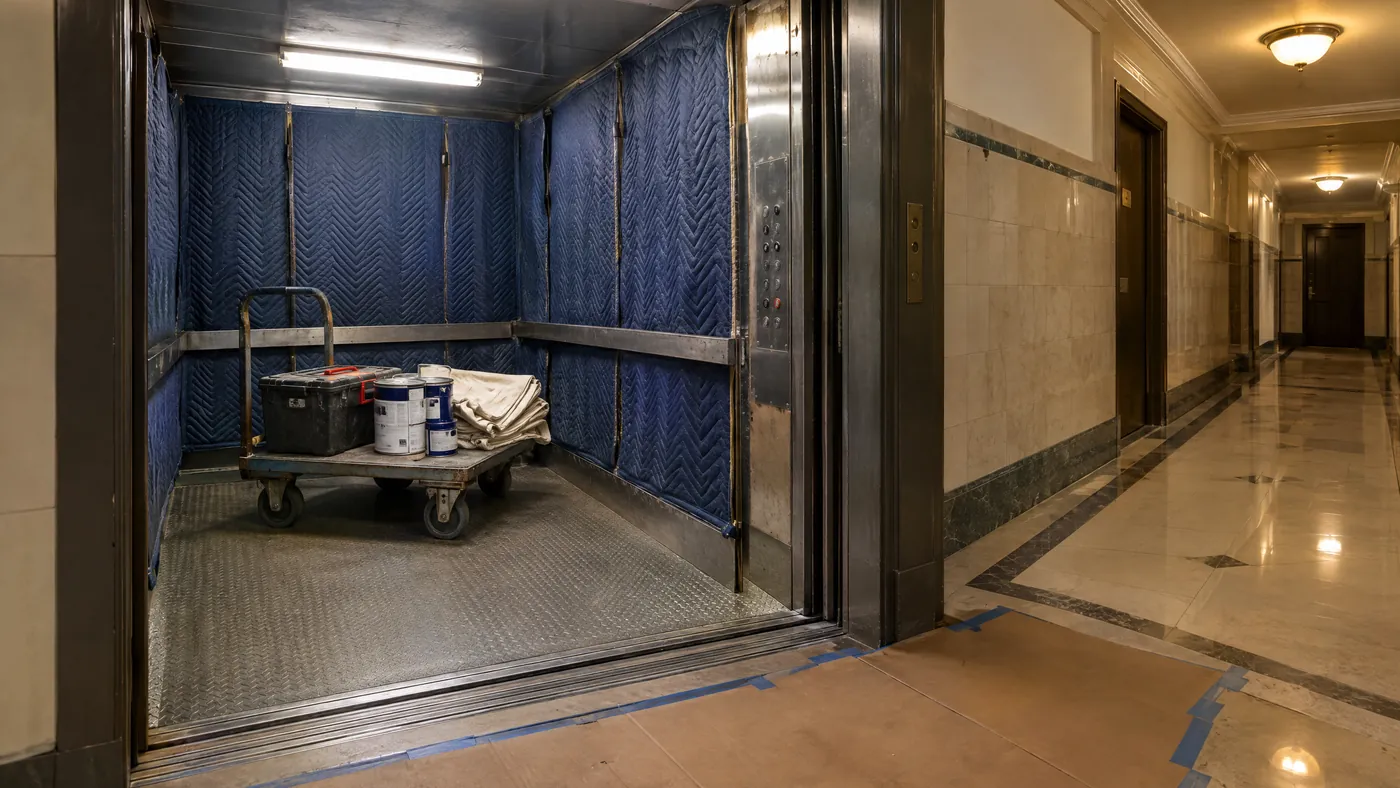
How much does a handyman cost in Manhattan?
Pricing usually works one of two ways: hourly or flat rate. Both are fair; what matters is that you know which one you're getting before work starts.
Hourly pricing
A typical NYC handyman hourly rate runs roughly $75 to $150 per hour in 2026. Many pros set a one- or two-hour minimum or add a trip charge, which makes sense in Manhattan, where parking, loading and building check-in can eat 30 minutes before a tool comes out. Materials are usually billed separately.
Hourly works best for a mixed list of small tasks where it's hard to predict how long each one takes.
Flat-rate pricing
For defined jobs, a flat price is easier to compare. These are typical New York City market ranges in 2026 and vary with the building, wall type and finishes.
| Task | Typical NYC price range |
|---|---|
| Mount a TV (customer-supplied mount, no wire concealment) | $150–$350 |
| Assemble a bed or dresser | $100–$300 per piece |
| Patch and paint a few small holes | $150–$400 |
| Paint one average bedroom, walls only | $450–$1,000 |
| Paint one bedroom, walls, ceiling and trim | $700–$1,500 |
| Re-caulk a tub or shower | $150–$350 |
| Replace a few damaged vinyl planks | $200–$500 |
What pushes prices up: plaster walls that need skim coating, high prewar ceilings, dark color changes needing extra coats, lead-safe work requirements, tight building hours, and walk-ups where everything goes up five flights. What brings prices down: a clear list, a cleared workspace and bundling several jobs into one visit.
For anything over a few hundred dollars, get a written, itemized estimate that lists the tasks, materials and whether cleanup and debris removal are included.
How to prepare a task list for an efficient visit
The best way to find an affordable handyman near you is to make each hour count. A well-prepared visit can get twice as much done.
- Write every task down, room by room, with measurements where relevant (for example, "55-inch TV, living room, center over the console").
- Take photos of each item and send them ahead so the handyman brings the right parts and anchors.
- Note the wall type if you know it. Plaster, brick and drywall each need different hardware.
- Buy or approve materials in advance: paint colors and sheen, shelves, hardware, mounts.
- Clear the work areas and move valuables and fragile items.
- Confirm building logistics: COI received, elevator booked, super notified, work hours confirmed.
- Prioritize. Put must-do items first in case the visit runs long.
Painting and flooring in prewar apartments
Manhattan's prewar buildings, from Harlem and Inwood to the Upper East Side and the Lower East Side, have their own quirks. Plan for them before you get a price.
Plaster walls
Most prewar apartments have plaster over lath or masonry, not drywall. Plaster cracks along old lines, bulges where it has separated, and doesn't take patching compound the same way drywall does. Expect skim coating and more prep time, which is where most of the cost of painting an older apartment goes.
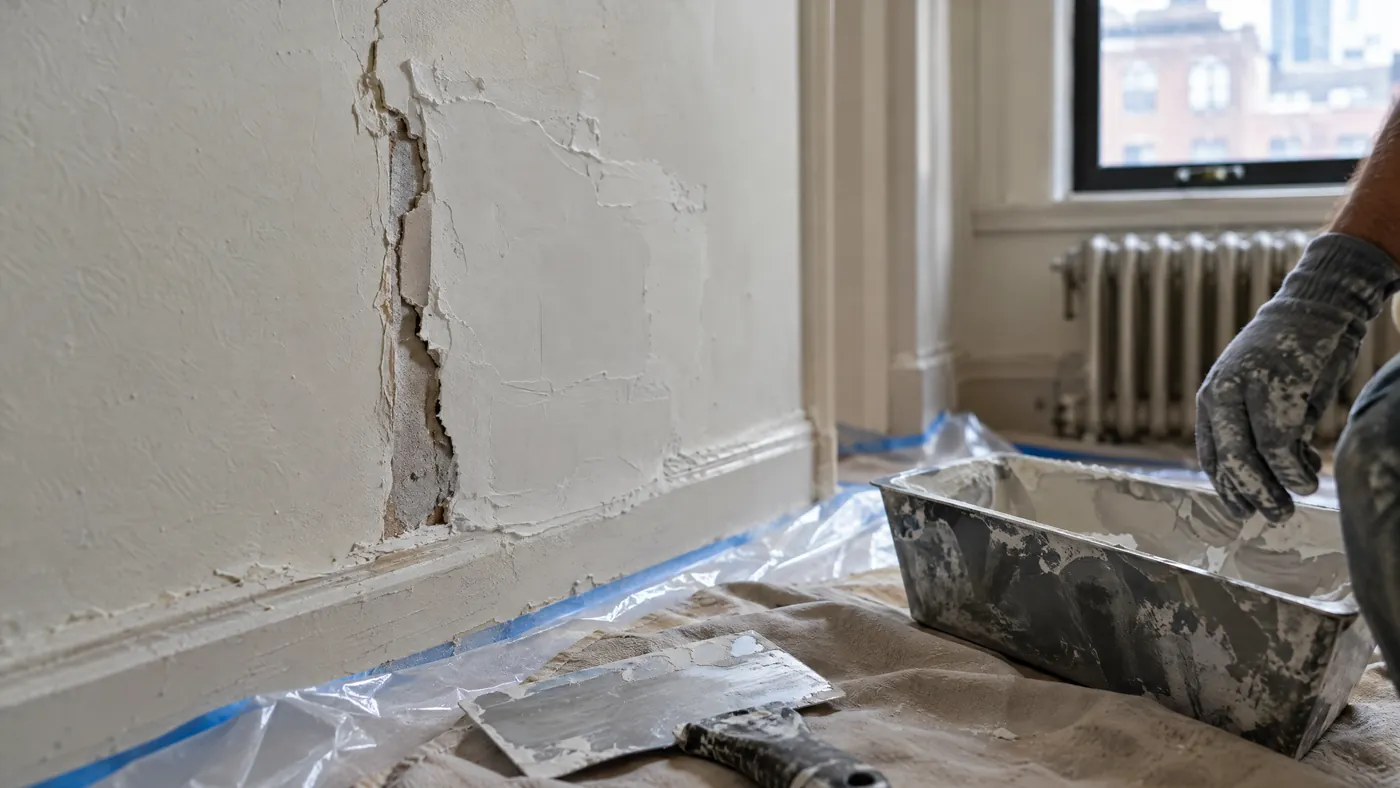
Lead paint
Any building built before 1978 may have lead paint under newer layers, and most prewar apartments were painted with it at some point. Sanding, scraping and cutting into painted surfaces can create dangerous dust. Contractors paid to disturb painted surfaces in pre-1978 homes are expected to follow the EPA's lead-safe work practices under its Renovation, Repair and Painting rule.
NYC's Local Law 1 adds requirements for landlords of older rental buildings where a young child lives, including lead-safe work practices for repairs. If you're a landlord, it's worth reviewing your obligations with HPD. If you're an owner or tenant, ask any painter how they handle lead-safe prep before they start.
Floors
Many prewar apartments have original oak strip or parquet floors. Small repairs, like replacing a few parquet blocks or fixing a squeaky board, are reasonable handyman work. Full refinishing or new flooring is a bigger job that usually needs building approval and, in many co-ops, compliance with house rules on soundproofing underlayment and floor coverings.
Hiring a handyman in Manhattan: a quick checklist
Before you book, confirm:
- The person or company holds a DCWP Home Improvement Contractor license for jobs over $200.
- They can provide a certificate of insurance in your building's required format.
- They're clear about hourly versus flat pricing, minimums and trip fees.
- They'll refer electrical, plumbing and gas work to licensed trades.
- You have a written estimate for anything beyond a small fix.
If you manage rental units, a home maintenance plan puts turnovers, repairs and tenant requests on one number, with photos from every visit. We work across the borough; see our Manhattan service area for details.
Get a free estimate
If you have a list of repairs, a room that needs painting or a floor to fix, our painting, flooring and repairs team can help. Send your task list and photos to request a free estimate, or call or text 929-400-9900. Crews speak English, Spanish, Bengali, Hindi and Urdu.