Small Bathroom Remodel in Brooklyn: Cost, Timeline and Building Rules
A small bathroom remodel in Brooklyn typically costs roughly $8,000 to $18,000 for a cosmetic refresh and $25,000 to $45,000 or more for a full gut in 2026, and takes anywhere from one week to about six weeks of on-site work. What moves your number most is not the size of the room but the building: the age of the pipes, the condition of the floor, and whether a co-op board, condo board or landlord has to sign off first.
This guide walks through realistic NYC cost ranges, what makes Brooklyn bathrooms different, the approvals you may need, and a practical checklist you can use before you call anyone.
How much does a small bathroom remodel cost in Brooklyn?
Most Brooklyn bathrooms are small: a classic prewar 5-by-7 or 5-by-8 room with a tub along the short wall, or a narrow rowhouse bath squeezed under a stair. Small does not mean cheap, because the expensive parts (plumbing, waterproofing, tile labor, debris removal up and down walk-up stairs) don't shrink much with square footage.
Here are typical New York City market ranges for 2026. They vary by building, scope and finishes, and they are not quotes.
| Project type | What it usually includes | Typical NYC range (2026) |
|---|---|---|
| Cosmetic refresh | New vanity, toilet, faucet, mirror, lighting, paint, regrouting or reglazing; no wall or pipe changes | $8,000 – $18,000 |
| Tub-to-shower conversion | Remove tub, new shower pan, waterproofing, wall tile, glass door, valve update | $12,000 – $25,000 |
| Full gut, same layout | Demo to studs, new supply and drain lines as needed, waterproofing, floor and wall tile, all new fixtures | $25,000 – $45,000 |
| Full gut with layout change | Moving the toilet, shower or vanity, more plumbing, often permits and drawings | $40,000 – $60,000+ |
Prewar co-ops in Brooklyn Heights or along Ocean Parkway can land at the top of these ranges once you add board requirements, restricted hours and elevator protection. A straightforward rental-unit refresh in a Bensonhurst two-family may land near the bottom.
Tile installation cost per square foot
Tile is often the single biggest labor line. In NYC, tile installation labor commonly runs about $15 to $40 per square foot. Large-format porcelain on a flat, well-prepped floor sits at the lower end. Penny rounds, herringbone, shower niches, and old floors that need leveling push it up. The tile itself is a separate cost, anywhere from a few dollars to $30 or more per square foot.
What drives bathroom remodel cost in Brooklyn's older buildings?
Brooklyn's housing stock is beautiful and old. Brownstones in Park Slope and Fort Greene, wood-frame rowhouses in Bushwick and Greenpoint, brick rowhouses in Bay Ridge, and prewar elevator co-ops in Prospect Lefferts Gardens and Kensington all hide conditions you only see once the tile comes off.
Old cast-iron and galvanized pipes
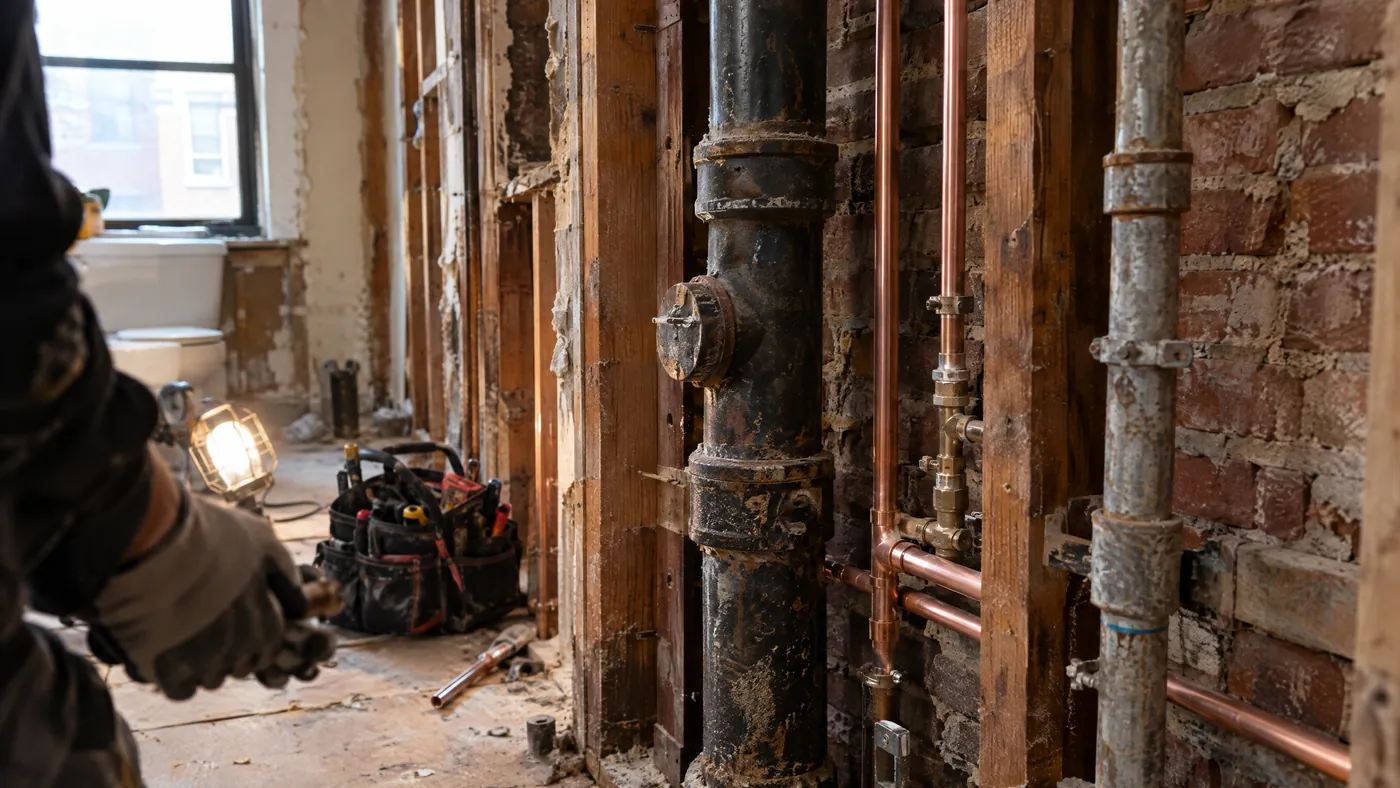
Many older Brooklyn buildings still have galvanized steel supply lines and cast-iron drains. Galvanized pipe corrodes from the inside, which shows up as low water pressure and rusty water. Cast iron can crack along the bottom. When the walls are open, replacing those runs is far cheaper than doing it later, but it adds cost and, in a multifamily building, may mean coordinating a riser shutdown with the super.
Uneven floors and hidden rot
Century-old joists sag, and a slow leak around a toilet flange can rot a subfloor for years without showing. Tile needs a flat, stiff base, so leveling, sistering a joist, or replacing subfloor is common. In co-ops, the old mortar bed under a prewar floor can be several inches thick and heavy to remove.
Tiny footprints and access
A walk-up fourth floor, a narrow stair, and no place to stage materials all add labor hours. Debris has to be bagged and carried down by hand, and some co-ops require protection of hallways and elevators every day.
Waterproofing done right
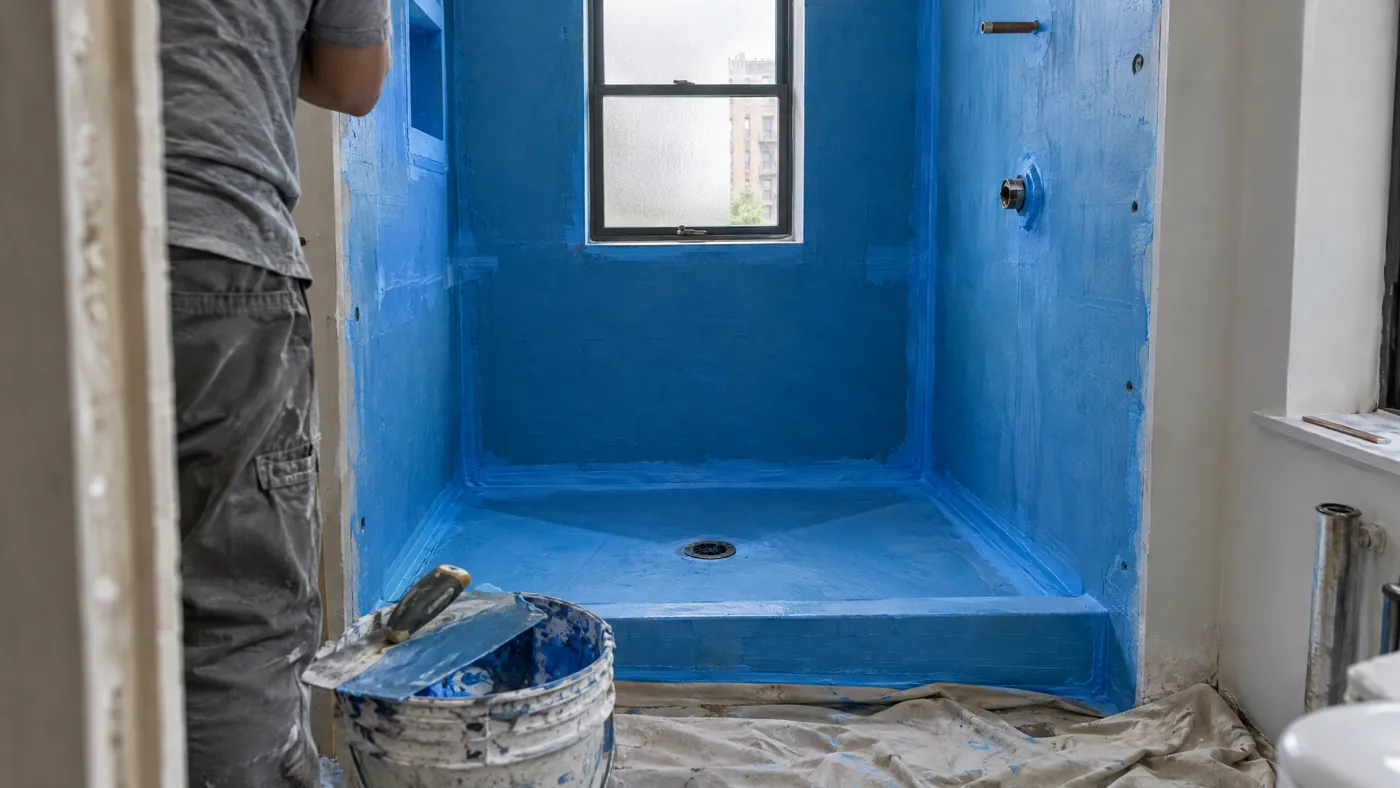
Old bathrooms often relied on tile and grout alone to keep water out, which is how ceiling stains appear in the apartment below. A proper remodel adds a continuous waterproofing membrane on shower walls and the shower floor, sealed at seams and pipe penetrations, and often under the whole floor. It is not glamorous, but it is the part that protects your neighbors and your deposit.
Lead paint and older finishes
Homes built before 1978 may contain lead paint, and renovation that disturbs it calls for lead-safe work practices, especially in rental units where young children live. Ask any contractor how they handle dust containment before demolition starts.
Co-op, condo and landlord rules for a bathroom remodel in New York
In a house you own outright, you mostly answer to the Department of Buildings. In an apartment, you answer to the building first.
Co-op and condo alteration agreements
Most Brooklyn co-ops and condos require board or managing agent approval before any bathroom work. Expect some combination of:
- A signed alteration agreement and a refundable deposit or processing fee
- Scope of work, drawings, and sometimes plans stamped by an architect or engineer for wet-area work
- Certificates of insurance from every contractor naming the building and managing agent
- Approved work hours, commonly weekday daytime only, with no weekend or holiday work
- Rules on elevator use, debris removal, water shutoffs and noise
- A deadline for finishing, sometimes with penalties if work runs over
Approval can take a few weeks to a couple of months, so submit early. Some buildings also restrict "wet over dry," meaning you cannot move a bathroom over a neighbor's living space.
If you rent
Tenants generally need written landlord permission for any alteration, and in rent-stabilized apartments repairs and fixture replacements are usually the owner's responsibility. If a bathroom has leaks, mold or broken fixtures, that is a repair request, not a remodel.
If you are the landlord
Turning over a bathroom between tenants is a different project from a full remodel. Landlords with two- and three-family buildings often do a fast refresh (reglaze, new vanity and toilet, paint) to keep units rent-ready. If that is you, our home maintenance plans for landlords cover turnovers, repairs and seasonal checks under one number.
When do you need a licensed plumber and a DOB permit?
In New York City, plumbing work must be performed by, or under the supervision of, a NYC licensed master plumber. That applies whether you live in a single-family house in Marine Park or a co-op in Midwood.
Permit needs depend on scope. As a general guide:
- Swapping fixtures in place (same toilet, sink and tub locations) is often treated as minor work, though the plumber still has to do the connections properly.
- Moving fixtures, adding a drain, replacing risers or altering gas lines usually requires Department of Buildings permits filed by a licensed plumber.
- Removing walls, changing structure, or combining rooms typically requires plans and a DOB filing.
- Electrical work, such as new circuits, GFCI outlets, heated floors or an exhaust fan, must be done by a NYC licensed electrician.
Rules change and every building is different, so check the NYC Department of Buildings or ask your contractor exactly which filings apply. A contractor who says permits are never needed for a bathroom is a red flag.
Bathroom remodel checklist: before, during and after
Use this list to keep your project on track. It works whether you are refreshing a rental or gutting your own bath.
- Measure and photograph the room, including the window, door swing, radiator and ceiling height.
- Decide scope: refresh, tub-to-shower, or full gut. Write down what must stay.
- Check building rules: alteration agreement, work hours, insurance requirements, approval timeline.
- Get two or three written, itemized estimates that list demo, plumbing, electrical, waterproofing, tile labor, materials and debris removal separately.
- Verify the contractor: confirm their DCWP Home Improvement Contractor license and ask for a certificate of insurance.
- Confirm who files permits and who the licensed plumber and electrician are.
- Order long-lead items early: vanities, custom glass and specialty tile can take weeks.
- Plan for a working toilet: if it is your only bathroom, ask how many days you will be without one.
- Set a contingency of 10 to 20 percent for what is found behind the walls.
- Walk through before tile goes up to see the waterproofing and valve heights.
- Final punch list: caulk lines, grout, slopes to drain, fan operation, door clearance.
- Keep records: permits, sign-offs, product warranties and paint colors.
How to choose a contractor for a bathroom remodel
Home improvement contractors working on residential property in NYC must hold a DCWP Home Improvement Contractor license for jobs over $200. You can look up a license through the Department of Consumer and Worker Protection. Ask for proof of insurance, a written contract with a payment schedule tied to progress, and a clear answer about who handles permits.
When we quote a bathroom, we ask about the age of the building, which floor the unit is on, and what the board requires before we talk tile. Those answers shape the price more than the finishes do.
How long does a small bathroom remodel take?
The on-site work is only part of the timeline. Here is a typical sequence for a full gut of a small Brooklyn bathroom:
| Phase | Typical duration |
|---|---|
| Design, estimates and selections | 1 – 3 weeks |
| Co-op or condo approval, permits | 2 – 8 weeks (can overlap with selections) |
| Demolition and debris removal | 1 – 3 days |
| Rough plumbing and electrical, inspections | 3 – 7 days |
| Walls, waterproofing, shower pan | 3 – 5 days |
| Tile floor and walls | 4 – 8 days |
| Fixtures, vanity, glass, paint, punch list | 3 – 7 days |
A cosmetic refresh usually takes one to two weeks. A tub-to-shower conversion often falls between two and four weeks. Custom glass is a common delay, since it is measured after tile is finished.
Small bathroom layout ideas that work in Brooklyn apartments
Small rooms reward simple decisions. A few ideas that hold up in real Brooklyn bathrooms:
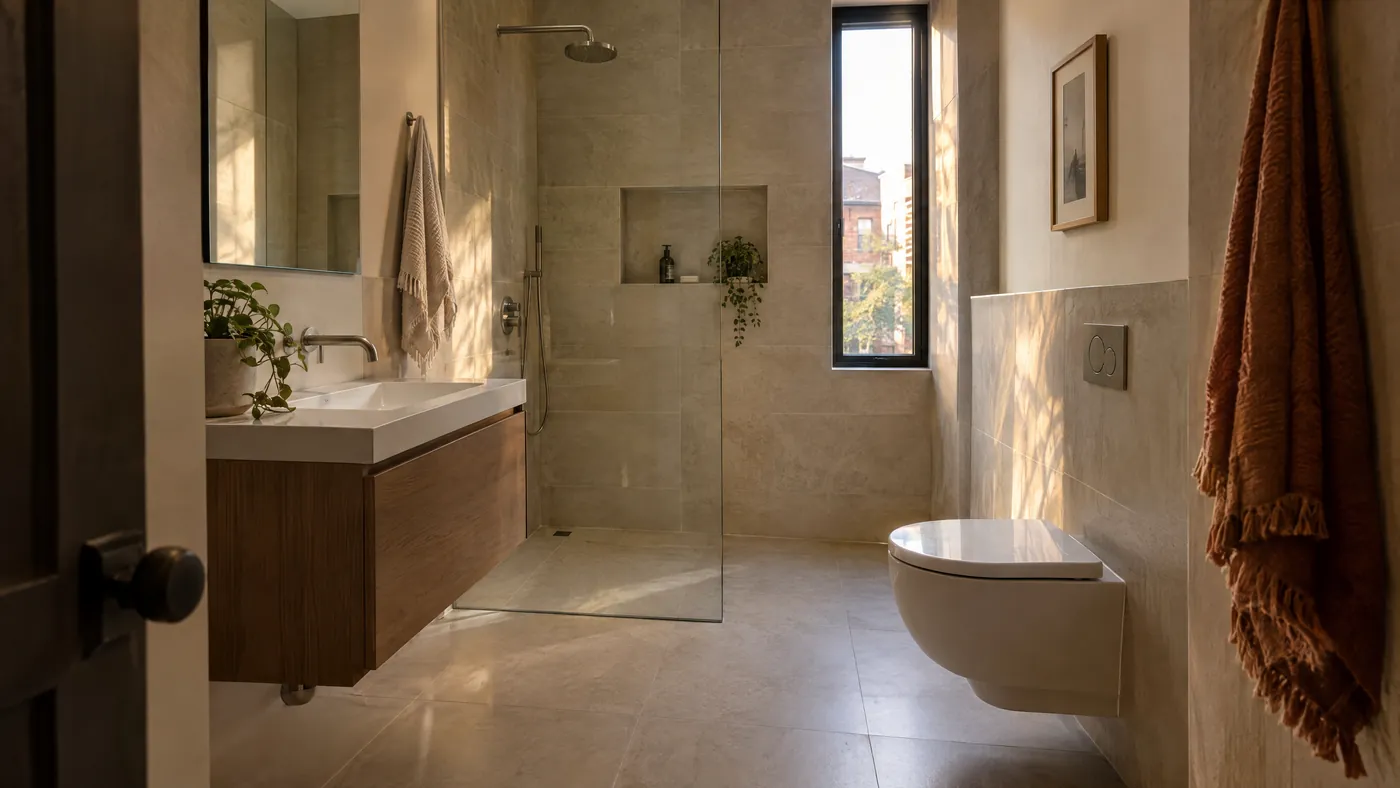
- Swap the tub for a walk-in shower. A 60-inch alcove becomes a roomy shower with a bench or niche. Keep a tub somewhere in the home if resale to families matters.
- Use a wall-hung vanity. Seeing floor beneath it makes the room feel bigger and makes cleaning easier.
- Go large with tile. Fewer grout lines read as calmer and larger. Running the same floor tile into the shower extends the room visually.
- Recess storage. A niche in the shower or a recessed medicine cabinet saves inches, if the wall cavity is free of pipes.
- Consider a pocket or outswing door. In a tight prewar bath, the door swing often eats the best wall.
- Upgrade ventilation. A quiet, properly ducted exhaust fan is the cheapest mold prevention you can buy, especially in windowless baths.
- Keep the plumbing wall. Leaving fixtures where the drains already are is the single best way to control a bathroom remodel cost.
If you are planning a kitchen too, our guide to kitchen remodel costs in Queens breaks down NYC pricing in the same way, and much of it applies across the river.
Get a free estimate for your Brooklyn bathroom
A small bathroom remodel goes best when the building rules, plumbing and waterproofing are planned before the first tile is chosen. We do kitchen and bathroom renovation work throughout Brooklyn, from brownstone baths in Clinton Hill to co-op bathrooms in Ditmas Park, and our crews speak English, Spanish, Bengali, Hindi and Urdu.
Request a free estimate or call or text 929-400-9900. Tell us your building type, floor and what your board requires, and we will walk you through scope and options for your bathroom renovation.