Kitchen Remodel Cost in Queens, NY: 2026 Prices, Permits and Planning
In 2026, a kitchen remodel in Queens commonly costs roughly $25,000 to $45,000 for a small kitchen that keeps its layout, $45,000 to $85,000 for a mid-range remodel, and $85,000 to $150,000 or more for a large or high-end kitchen with layout changes. Where your project lands depends on cabinets, counters, whether gas and plumbing move, permits and the type of building you live in. The only number that matters for your kitchen is a written, itemized estimate based on your actual space.
Below are realistic New York City market ranges, what pushes the cost up or down, how Queens housing types change the job, and how to plan a remodel and compare contractors.
How much does a kitchen remodel cost in Queens?
These are typical NYC market ranges for 2026, not quotes. They assume a typical Queens kitchen of roughly 70 to 200 square feet and include labor and materials, but not major structural work, asbestos abatement or unusual building conditions.
| Remodel size | What it usually includes | Typical NYC range (2026) |
|---|---|---|
| Cosmetic refresh | Paint or reface cabinets, new counters, backsplash, fixtures, lighting | $12,000 – $25,000 |
| Small kitchen remodel | New stock or semi-custom cabinets, quartz or granite counters, flooring, mid-range appliances, same layout | $25,000 – $45,000 |
| Mid-range remodel | Semi-custom cabinets, better appliances, new lighting and outlets, minor layout tweaks | $45,000 – $85,000 |
| Large or high-end remodel | Custom cabinets, stone slabs, premium appliances, moved walls, sink or range, permits | $85,000 – $150,000+ |
Prices in Queens are often a little lower than Manhattan for the same scope, mostly because access, parking and building rules are easier in a detached house. A co-op in Forest Hills or Jackson Heights can cost closer to Manhattan levels once you add board requirements and limited work hours.
What drives kitchen remodel cost?
When people search for the cost to remodel a kitchen, they usually get one average number. In practice the price is the sum of a handful of decisions, and a few of them matter far more than the rest.
Cabinets
Cabinets are usually the biggest line item, often a third or more of the total. Stock cabinets cost the least and come in fixed sizes. Semi-custom lines offer more sizes and finishes. Fully custom cabinets are built for your space and cost the most. In older Queens houses where walls are rarely square, semi-custom with good filler work is often the sweet spot.
Countertops
Laminate is the budget option. Quartz and granite are the most common choices in Queens kitchens today, and prices depend heavily on the slab, edge profile and number of cutouts. Marble and specialty stone cost more and need more care.
Layout changes and gas or plumbing moves
Keeping the sink, range and dishwasher where they are is the single best way to control cost. Moving a sink to an island or a gas range to another wall means new piping, opening floors or walls, and work by a NYC licensed master plumber, often with a Department of Buildings permit. Removing a wall can add structural review and more patching.
Electrical
Older Queens homes often have too few kitchen circuits for modern appliances. Adding dedicated circuits, under-cabinet lighting or an induction range can mean panel work. Electrical work in NYC must be done by a licensed electrician.
Appliances
A basic appliance package and a premium one can differ by tens of thousands of dollars. Decide on appliances early, because their sizes drive the cabinet design.
Permits, approvals and building conditions
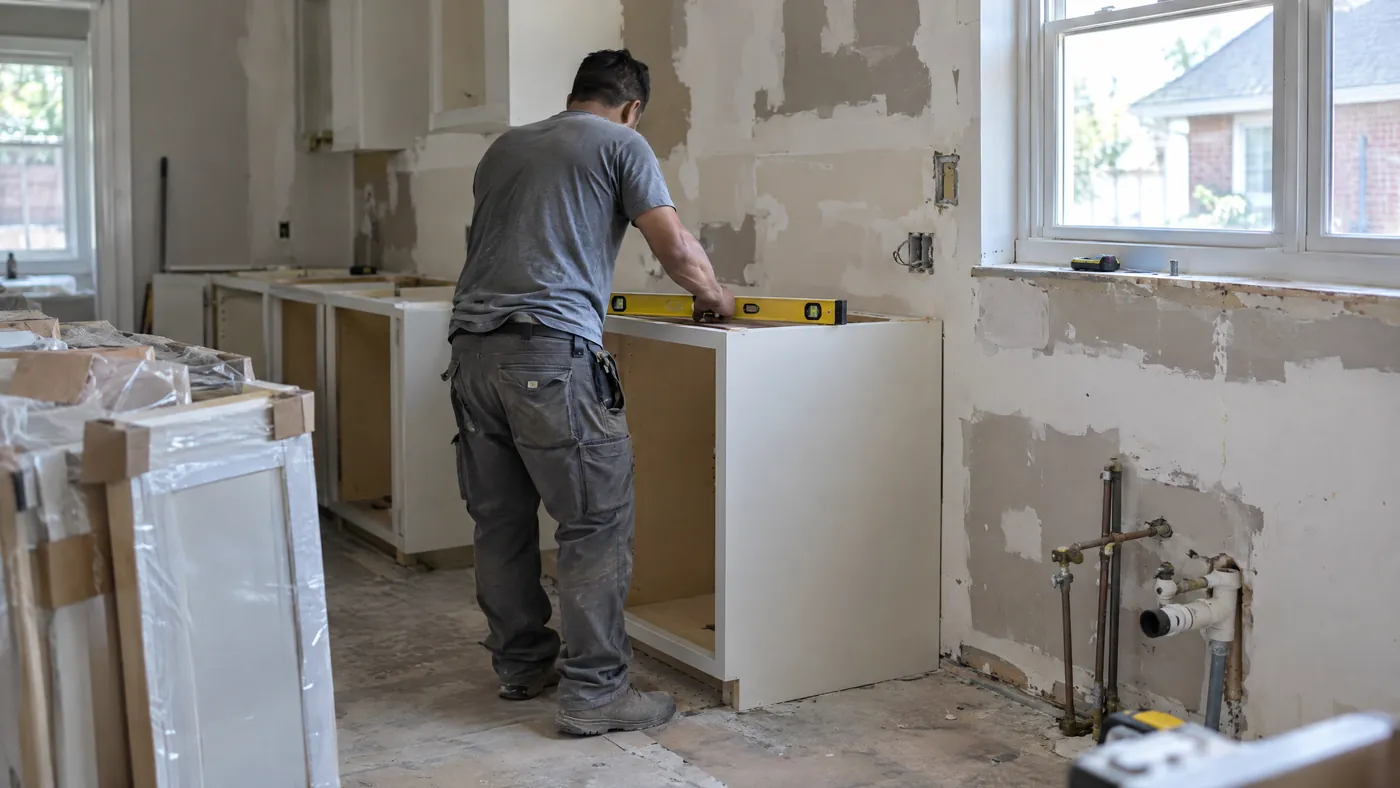
Permit fees, filing by a registered architect or engineer when needed, co-op alteration agreements, and surprises behind the walls such as old galvanized pipes or uneven subfloors all add cost. Budget a contingency of 10 to 15 percent for these.
How Queens housing types change the job
Queens has some of the most varied housing in the city, and the building you live in shapes both cost and process.
Detached and semi-detached houses
In neighborhoods like Bayside, Douglaston, Fresh Meadows, Hollis and Jamaica Estates, you often have more room, easier material deliveries and more freedom with layout. Older houses can hide outdated wiring and plumbing, and kitchens that were extended at some point may have uneven floors where the addition meets the original house.
Two-family and three-family homes
Two-family homes are everywhere in Queens, from Richmond Hill and Woodhaven to Ozone Park, Astoria and Corona. If you rent the other unit, plan the work so the tenant keeps water and gas service, and remember that work affecting the rental unit or shared systems may need extra coordination. Owners who remodel both kitchens at once can sometimes save on mobilization and ordering.
Co-ops in Jackson Heights, Forest Hills and Rego Park
Queens has many pre-war and post-war co-op buildings, especially in Jackson Heights, Forest Hills, Rego Park, Kew Gardens and Sunnyside. Expect:
- Board approval and an alteration agreement before any work starts, often with drawings, insurance certificates and a deposit.
- Limited work hours, usually weekdays only, which stretches the timeline.
- Restrictions on moving plumbing or gas, and in some buildings rules against placing wet areas over a neighbor's living space.
- Elevator and debris rules for bringing materials in and out.
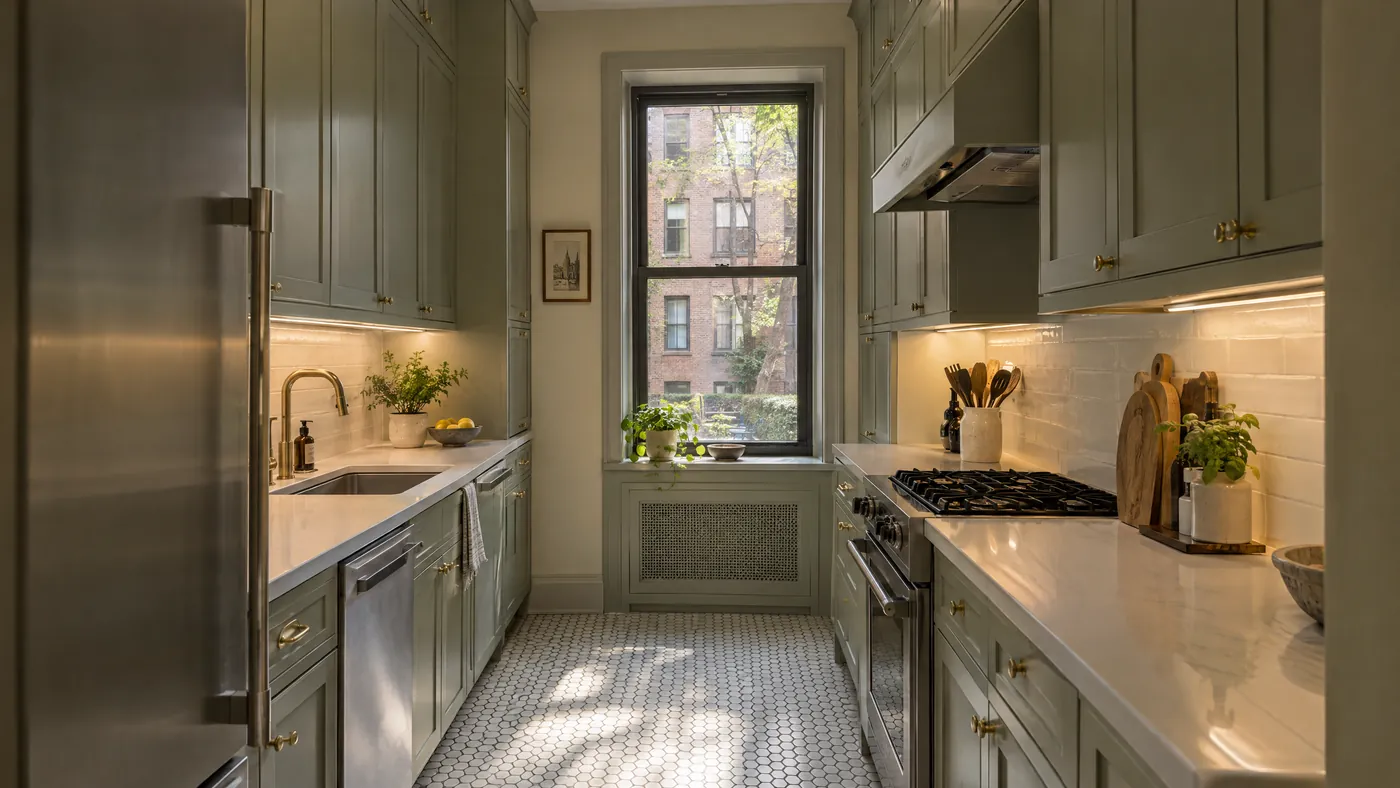
Co-op kitchens are often compact galley layouts, so a small kitchen remodel cost in a co-op can be close to a larger kitchen in a house once those requirements are included.
Do you need a DOB permit for a kitchen remodel?
Not always. A general guide:
- Usually no DOB permit: replacing cabinets, counters, backsplash, flooring and appliances in the same locations, and painting.
- Usually needs a permit: moving or adding gas lines, new plumbing fixtures in new locations, removing or altering walls, and significant electrical work.
- Always licensed trades: plumbing and gas work requires a NYC licensed master plumber, and electrical work requires a NYC licensed electrician, who file their own permits when required.
If your home is in a historic district, such as parts of Jackson Heights, Ridgewood or Douglaston, interior-only kitchen work usually is not affected, but any exterior change like a new window or vent may need Landmarks Preservation Commission review. The NYC Department of Buildings explains when work needs a permit.
How long does a kitchen remodel take?
A typical timeline for a Queens kitchen that keeps its layout:
| Phase | Typical time |
|---|---|
| Measuring, design and choices | 2 – 4 weeks |
| Cabinet and material ordering | 2 – 8 weeks (custom can be longer) |
| Co-op board or DOB approvals, if needed | A few weeks to a few months |
| Demolition and rough plumbing and electrical | 1 – 2 weeks |
| Cabinets, counters templating and install | 2 – 4 weeks |
| Backsplash, finishes, punch list | 1 – 2 weeks |
Countertops are usually measured after the base cabinets are in, then fabricated, which is why many kitchens sit without counters for a week or two. Ask any contractor how they handle that gap and whether you can keep a temporary sink.
How to plan a kitchen remodel
Spring is when most people search for kitchen remodels, which also means it is when contractors and showrooms are busiest. Planning in the fall lets you design over the winter and start work with materials already ordered. A simple plan:
- Set a realistic budget range using the table above, then hold back 10 to 15 percent for contingency.
- List what is not working in your current kitchen: storage, counter space, lighting, traffic flow.
- Decide whether the layout stays. This is the biggest cost decision you will make.
- Choose appliances early so the cabinet design fits them.
- Check building rules. Co-op owners should get the alteration agreement and house rules before getting estimates.
- Get two or three written estimates for the same scope.
- Order long-lead items before demolition, so your kitchen is not torn out while you wait for cabinets.
- Plan how you will live without a kitchen, such as a temporary setup with a microwave and fridge in another room.
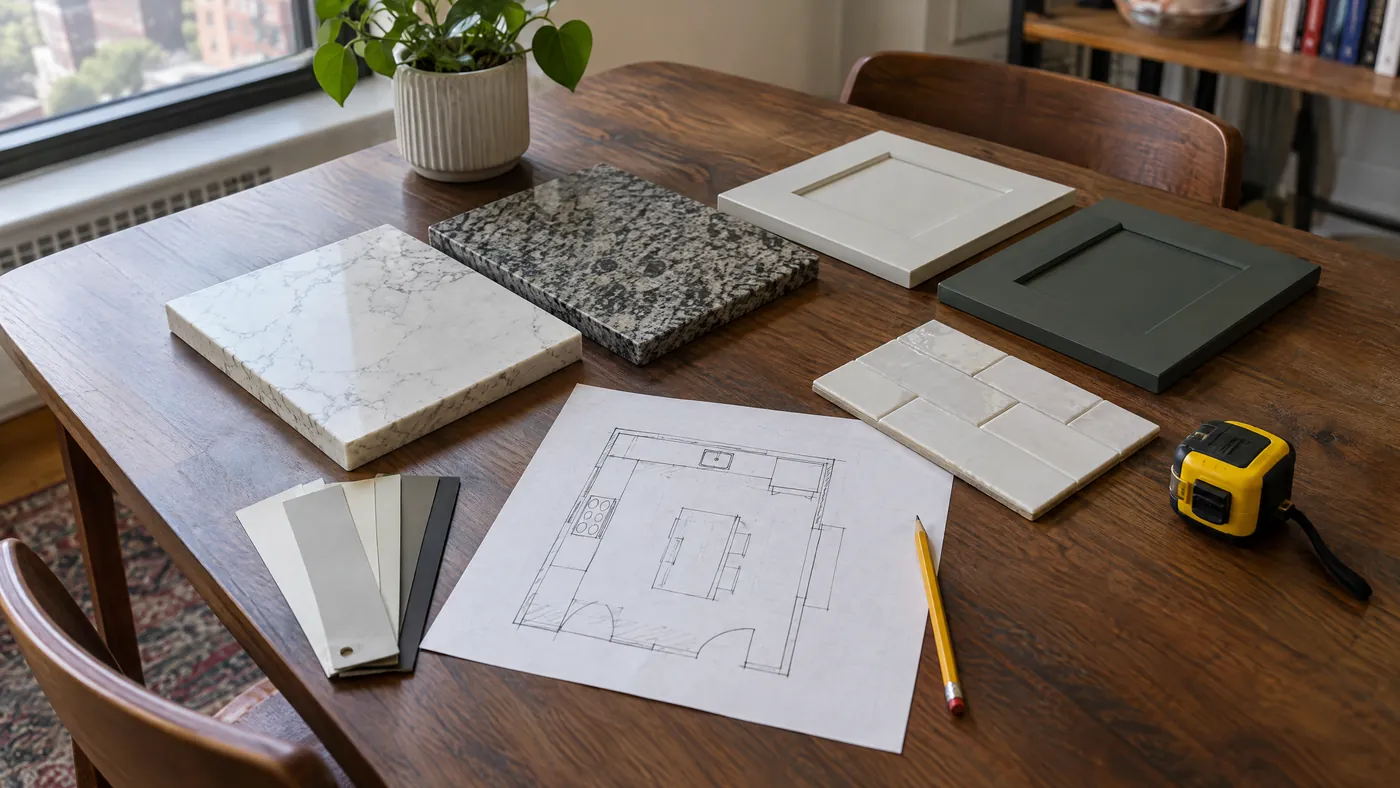
When we walk a kitchen for an estimate, we ask where the gas and water lines run, how old the electrical panel is and whether there is a basement or apartment below. Those three answers explain most of the difference between a small and a large budget. If you are planning a bathroom at the same time, our guide to a small bathroom remodel covers similar cost and co-op questions.
How to compare estimates and choose a contractor for a kitchen remodel
The lowest number is not always the cheapest job. When you compare estimates:
- Make sure they cover the same scope. One estimate may include demolition, disposal, electrical upgrades and permits while another leaves them out.
- Ask for itemized pricing for cabinets, counters, labor, plumbing, electrical, flooring and finishes.
- Look for allowances. If an estimate includes a low allowance for tile or fixtures, your final price will rise when you choose real products.
- Get the payment schedule in writing, tied to completed work rather than dates, and avoid paying most of the job up front.
- Confirm who files permits and who the licensed plumber and electrician will be.
- Ask about timeline, work hours and cleanup, especially in a co-op or two-family house.
Verify the contractor's DCWP license
In New York City, home improvement contractors working on residential property must hold a Home Improvement Contractor license from the Department of Consumer and Worker Protection for jobs over $200. Before you sign, look up the license on the DCWP website or through 311, and ask for proof of liability and workers' compensation insurance. A written contract should list the scope, price, payment schedule and start and finish dates.
Kitchen remodeling across Queens
We work across Queens, from Jamaica and Hollis to Flushing, Astoria, Ridgewood and the Rockaways, and our crews speak English, Spanish, Bengali, Hindi and Urdu, which makes it easier to talk through choices with everyone in the household. You can learn more about our home repair and renovation work in Queens, or see what our kitchen and bathroom renovation service covers.
Get a free, itemized kitchen remodel estimate
If you are weighing a kitchen remodel in Queens, the most useful next step is an estimate based on your actual kitchen, building and wish list. Request a free estimate or call or text 929-400-9900, and we will walk the space, talk through layout and finishes, and put the numbers in writing. You can also read more about our kitchen renovation services before you call.