NYC Heat Season 2026: Landlord Boiler and Heating Checklist for NYC
NYC heat season began on October 1 and runs through May 31. During those months, landlords must keep apartments at least 68°F from 6am to 10pm when it is below 55°F outside, and at least 62°F overnight regardless of the weather, with hot water at 120°F all year. The fastest way to avoid a 311 heat complaint is to get the boiler, radiators and controls checked now, before the first real cold snap.
This guide covers the legal rules, what actually happens after a complaint, a pre-season checklist you can hand to your super, and how to handle a no-heat call quickly. It is written for owners of walk-ups and small multifamily buildings in the Bronx, Brooklyn and Queens, but the rules apply citywide.
What are the NYC heat season rules?
The rules come from the NYC Housing Maintenance Code and are enforced by the Department of Housing Preservation and Development (HPD). They apply to residential rental buildings, and they are simple enough that every owner and super should know them by heart.
| Period | Outside temperature | Minimum inside temperature |
|---|---|---|
| Oct 1 – May 31, 6am to 10pm | Below 55°F | 68°F |
| Oct 1 – May 31, 10pm to 6am | Any temperature | 62°F |
| All year, all hours | Any temperature | Hot water at 120°F at the tap |
A few points owners often miss:
- The nighttime rule has no outside trigger. Even on a mild October night, the apartment must stay at 62°F or warmer.
- Hot water is year-round. A failed water heater in July is still a violation, but a boiler that also makes domestic hot water can take out heat and hot water at the same time in winter.
- The temperature is measured inside the apartment, not at the boiler or in the hallway. A boiler that runs fine but cannot push heat to the top floor still leaves you out of compliance.
You can read HPD's own guidance on heat and hot water on the NYC HPD website.
What happens after a 311 heat complaint?
When a tenant reports no heat or no hot water through 311, the complaint goes to HPD. The process generally works like this:
- HPD tries to reach the owner using the contact on the building's property registration, and may also call the tenant to see if the problem has been fixed.
- If heat is not restored, HPD can send an inspector. The inspector takes temperature readings inside the apartment and outside.
- Violations can be issued. Heat and hot water violations are classified as immediately hazardous (Class C), the most serious category, and they come with short correction deadlines and potential civil penalties.
- HPD can make emergency repairs. If an owner does not act, HPD's Emergency Repair Program can send its own contractor to restore heat or fuel and bill the cost back to the owner, with charges that can become a lien on the property.
Repeated complaints also make your building more visible to HPD. Buildings with a history of heat problems can face more inspections and closer scrutiny, so the cheapest heat complaint is the one that never gets filed.
Keep your registration current
HPD contacts owners through the annual property registration. If the phone number on file goes to a former manager or a disconnected line, you lose your chance to fix the problem before an inspector arrives. Check it before winter.
Pre-season boiler and radiator checklist
Most no-heat calls in the first cold week of the season trace back to something that could have been caught in September or early October. Use this checklist as a starting point, and have a qualified boiler technician handle anything involving the burner, gas train or controls.
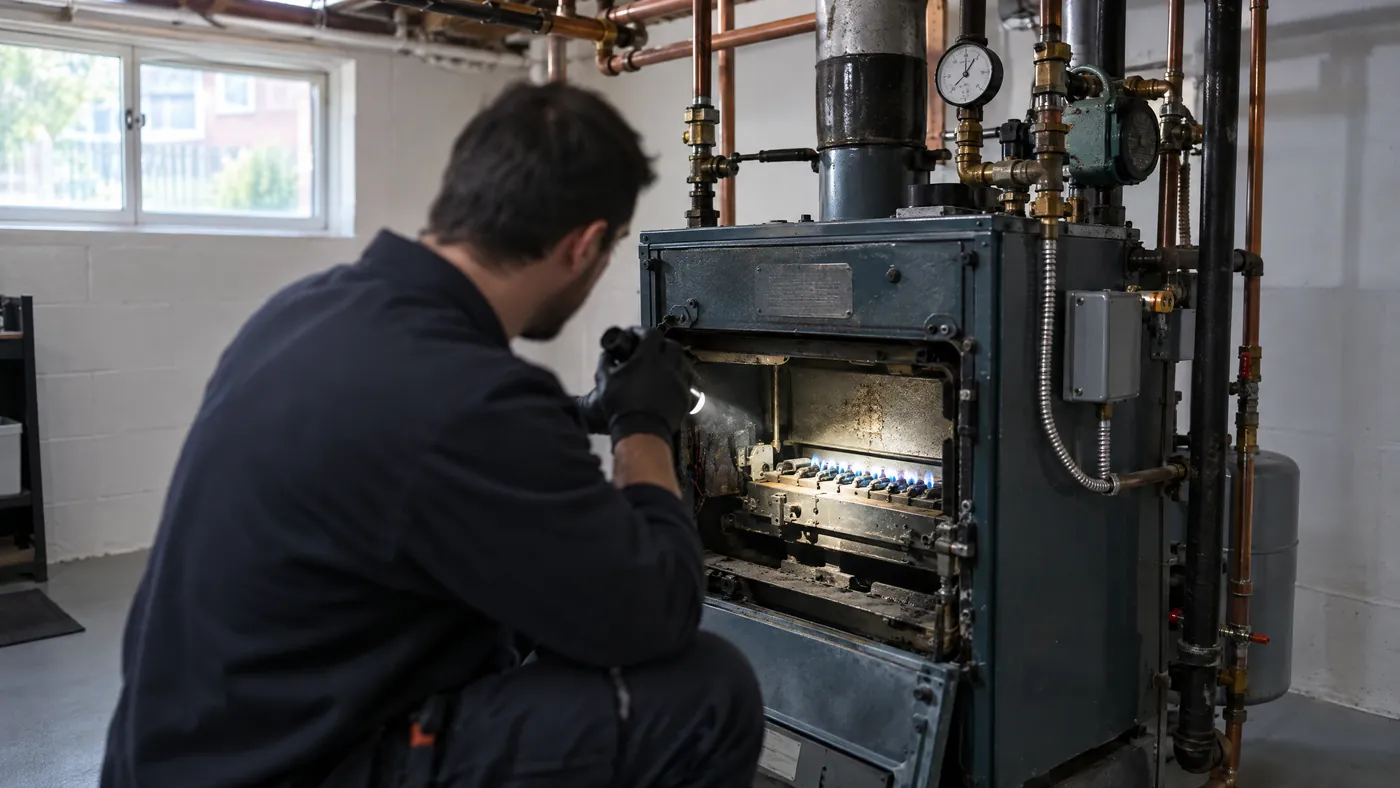
Boiler and burner (licensed professional)
- Annual cleaning and tune-up of the burner and combustion chamber
- Combustion test and adjustment for efficient, safe burning
- Check and test the low-water cutoff and other safety controls
- Inspect the flue, chimney connector and venting for blockages or corrosion
- Check for leaks at the boiler, valves and near piping
- Confirm required Department of Buildings boiler inspections are up to date for your building type
Fuel supply
- Oil heat: schedule a fill, confirm the delivery company has access, and check the tank and lines for leaks or weeping
- Gas heat: confirm the account is current and the meter area is clear; any work on gas piping must be done by a NYC licensed master plumber
Distribution: steam vs. hot-water systems
Many pre-war walk-ups in the Bronx and Brooklyn run on one-pipe or two-pipe steam. Many Queens two-family homes and newer buildings use hot-water (hydronic) baseboard or radiators. The checks are different.
| Task | Steam system | Hot-water system |
|---|---|---|
| Check water level | Sight glass at proper level; flush low-water cutoff per manufacturer | Check system pressure on the gauge |
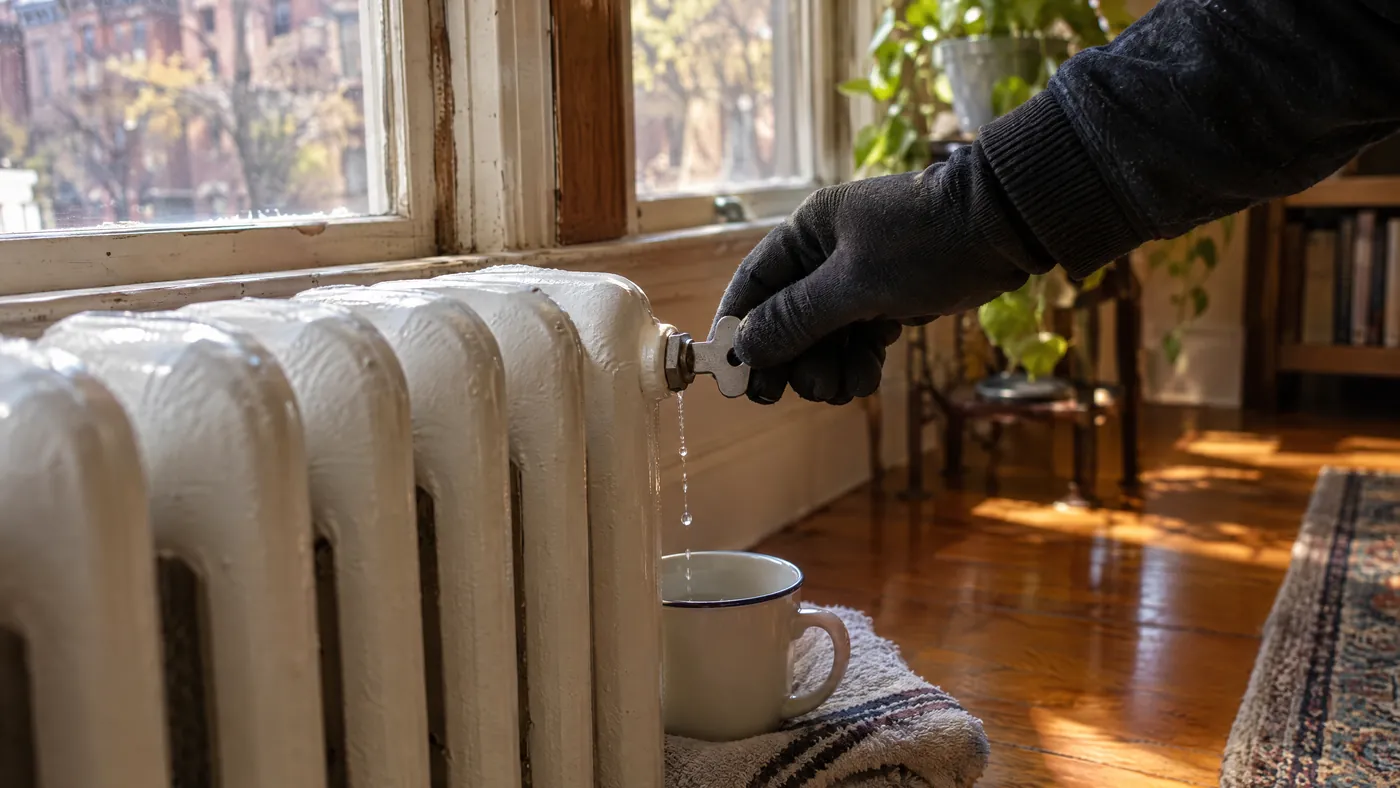
| Air removal | Test and replace stuck radiator air vents | Bleed radiators and baseboard at each bleed valve |
| Common symptom | Banging pipes, cold radiators at the far end | Gurgling, cold tops of radiators |
| Main concern | Pipe pitch and failed vents | Air in the system, failed circulator pump |
Radiators and apartments
- Walk every unit, or at least the top floor and the units furthest from the boiler
- Bleed hot-water radiators and replace failed steam vents
- Check that radiator valves are fully open on one-pipe steam (partly closed valves cause water hammer)
- Make sure furniture and covers are not blocking radiators
Controls and sensors
- Test the thermostat or the heat timer and its outdoor and indoor sensors
- Set schedules to meet the 68°F day and 62°F night minimums, with some margin
- Replace dead batteries in programmable thermostats
Carbon monoxide and smoke alarms
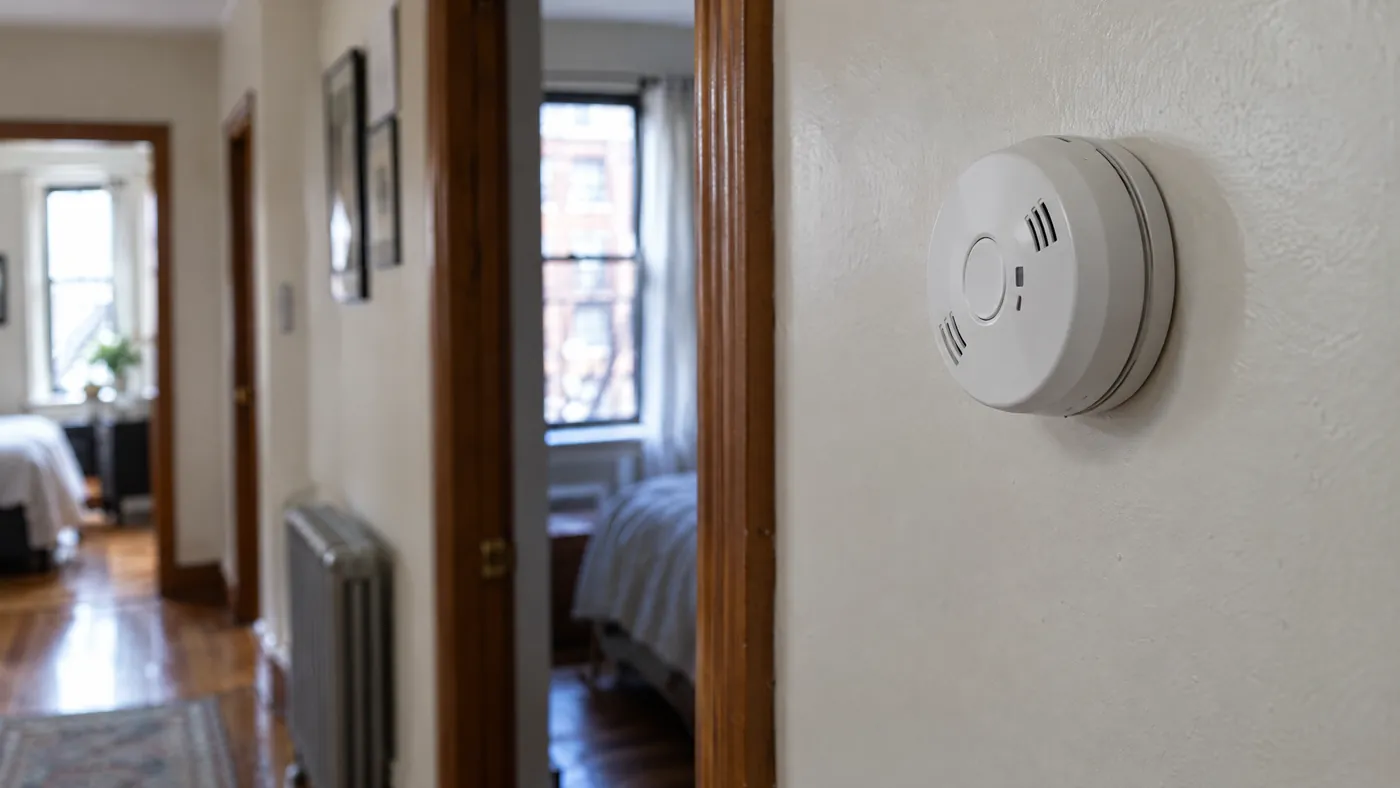
New York City requires carbon monoxide alarms in most residential buildings, and a boiler that has been off all summer is a good reason to check them. Confirm every unit has working smoke and carbon monoxide alarms, replace any that are past their service life, and keep a record of when you checked. HPD and the Department of Buildings publish the current requirements for owners and tenants.
How to handle a no-heat call fast
Even a well-maintained boiler can fail on the coldest night of the year. What matters is how quickly you respond and how well you document it.
- Answer the call or text the same day. A tenant who hears nothing is far more likely to call 311.
- Figure out the scope. One cold apartment usually means a radiator, valve or vent problem. The whole building cold usually means the boiler, fuel or power.
- Check the basics at the boiler. Is the emergency switch on? Is there power? Is the oil tank empty or the gas off? Is the water level or pressure low? Has the burner locked out on a safety?
- Do not reset a burner over and over. Repeated resets can flood a combustion chamber with fuel. If it does not restart cleanly, call a qualified technician.
- Call an emergency boiler repair service if the system is down. Have the boiler make, fuel type and a description of the symptoms ready.
- Tell tenants what is happening and when you expect heat back.
- Keep records: time of the report, who you called, when they arrived, what was done and when heat was restored. Photos of the repair help.
Space heaters are not a fix
If a repair will take time, some owners hand out electric space heaters. That can help in a pinch, but older apartments can overload circuits, and space heaters are a fire risk if they are placed near curtains or beds. It does not take the place of restoring heat, and it does not stop an HPD violation.
How should landlords communicate with tenants about heat?
Good tenant communication cuts down on complaints, even when something goes wrong. Before the season starts:
- Post or send one number tenants should call or text for heat problems, including nights and weekends.
- Ask tenants to report problems early. A radiator that is lukewarm in October is much easier to fix than one that is ice cold in January.
- Explain the basics of your system. Steam radiators hiss and clank; tenants should not close one-pipe steam valves partway or paint over air vents.
- Give notice of planned shutdowns. If the boiler needs to go off for a repair, tell tenants in writing ahead of time and schedule it for the warmest part of the day.
- Communicate in the languages your tenants speak. In many Bronx, Queens and Brooklyn buildings, a notice in English only will not reach everyone.
Borough notes: Bronx, Brooklyn and Queens
Heating systems tend to follow the housing stock, so where your building is tells you a lot about what will go wrong.
- The Bronx: large numbers of pre-war walk-ups and elevator buildings on steam, often with older boilers and long pipe runs. Water hammer, failed vents and cold top floors are common. See our property services in the Bronx.
- Brooklyn: brownstones and rowhouses converted to two to four units, plus pre-war walk-ups in neighborhoods like Bushwick, Crown Heights and Flatbush. Mixed steam and hot-water systems, sometimes with additions that were never balanced. See our Brooklyn home repair and maintenance page.
- Queens: many two-family and three-family homes in places like Jamaica, Richmond Hill, Woodhaven and Flushing, often on hot-water systems with oil or gas boilers that also make hot water. When the boiler goes, both heat and hot water go with it. See our Queens service area.
If your building also has an older basement where pipes run near outside walls, a burst pipe on a deep-freeze night can turn a heat call into a water damage call. Our guide to emergency plumbing in the Bronx covers what to do in the first hour.
How a home maintenance plan helps during heat season
Heat problems are rarely one big failure. They are usually a missed tune-up, a stuck vent, a thermostat battery or a tenant who did not know who to call. A maintenance plan puts those pieces on a schedule.
With our home maintenance plans for landlords, you get one number for tenants to call or text, seasonal checks before heat season, emergency repair coordination, and photos with every visit so you have a record of what was done. We coordinate with qualified boiler and gas professionals for burner and gas work, and we can help you work through HPD violations if you already have open ones. Our crews speak English, Spanish, Bengali, Hindi and Urdu, which helps when the tenant on the phone is more comfortable in another language.
If you manage several small buildings, a plan also means somebody is walking the top floors in October instead of finding out about a cold apartment from an HPD notice. You can compare what a plan includes on our landlord maintenance plans page.
Get your building ready for winter
Heat season is already here, and the first cold week is when boiler technicians are busiest. If you want help with a pre-season walk-through, radiator and vent work, tenant communication or ongoing maintenance for a building in the Bronx, Brooklyn or Queens, request a free estimate or call or text us at 929-400-9900. We are open Monday to Friday 8am to 7pm, Saturday 9am to 6pm and Sunday 10am to 4pm, with nights and holidays by appointment.