Fall Home Maintenance Checklist for Staten Island: Gutters, Yard, Floods
A good fall home maintenance checklist on Staten Island comes down to five jobs: clear the gutters (more than once), shut down outdoor water before the first freeze, fix fences and steps while the ground is workable, get the heating system checked, and prepare for nor'easters and coastal flooding. Do those between early October and early December and most winter emergencies never happen.
Below is the full checklist, organized month by month, with notes on cost and what to hand off to a pro.
Why fall maintenance matters more on Staten Island
Staten Island housing is different from the rest of the city. Most homes are detached or semi-detached one- and two-family houses with their own yards, driveways, fences and trees. That means more gutter length, more lawn, more outdoor plumbing and more things that can break when the weather turns.
Neighborhoods like Westerleigh, Todt Hill, Grymes Hill, Eltingville and Annadale also have large mature oaks, maples and sweetgums that drop leaves from mid October into December. On the East Shore and South Shore, the bigger risk is water: nor'easters push storm surge and heavy rain into low-lying blocks.
If you own a two-family house and rent out a unit, fall work also protects your tenant. A frozen pipe or wet basement in January is an emergency for two households, not one.
The month-by-month fall home maintenance checklist
Use this as a working list and check items off.
| When | Task | DIY or pro |
|---|---|---|
| Early October | Test smoke and carbon monoxide detectors; replace batteries | DIY |
| Early October | Schedule boiler or furnace service and chimney inspection | Pro |
| Early October | Walk the fence line; mark loose posts, rot and leaning sections | DIY |
| Early October | Check deck boards, railings and exterior stairs for rot or wobble | DIY, then pro for repairs |
| Mid October | Aerate and overseed the lawn; feed with a fall fertilizer | DIY or landscaper |
| Mid October | Trim shrubs away from siding, AC units and the meter | DIY or landscaper |
| Late October | First gutter cleaning; flush downspouts | Pro for two stories or more |
| Late October | Test the sump pump; check the backwater valve | DIY test, pro to service |
| Late October | Repair or replace fence sections before the ground freezes | Pro |
| Early November | Shut off and drain outdoor faucets; store hoses | DIY |
| Early November | Blow out irrigation lines | Pro |
| Early November | Clean and store patio furniture; tie down anything that can blow away | DIY |
| Mid November | Final leaf cleanup; mulch beds; last mow at a slightly lower height | DIY or landscaper |
| Late November | Second gutter cleaning after most leaves drop | Pro for two stories or more |
| Late November | Seal driveway and walkway cracks; check sidewalk trip hazards | DIY or mason |
| Early December | Stock ice melt, shovels and a flashlight; review storm plan | DIY |
The rest of this guide explains the items that cause the most trouble when they're skipped.
How often should you clean your gutters, and what does gutter cleaning cost?
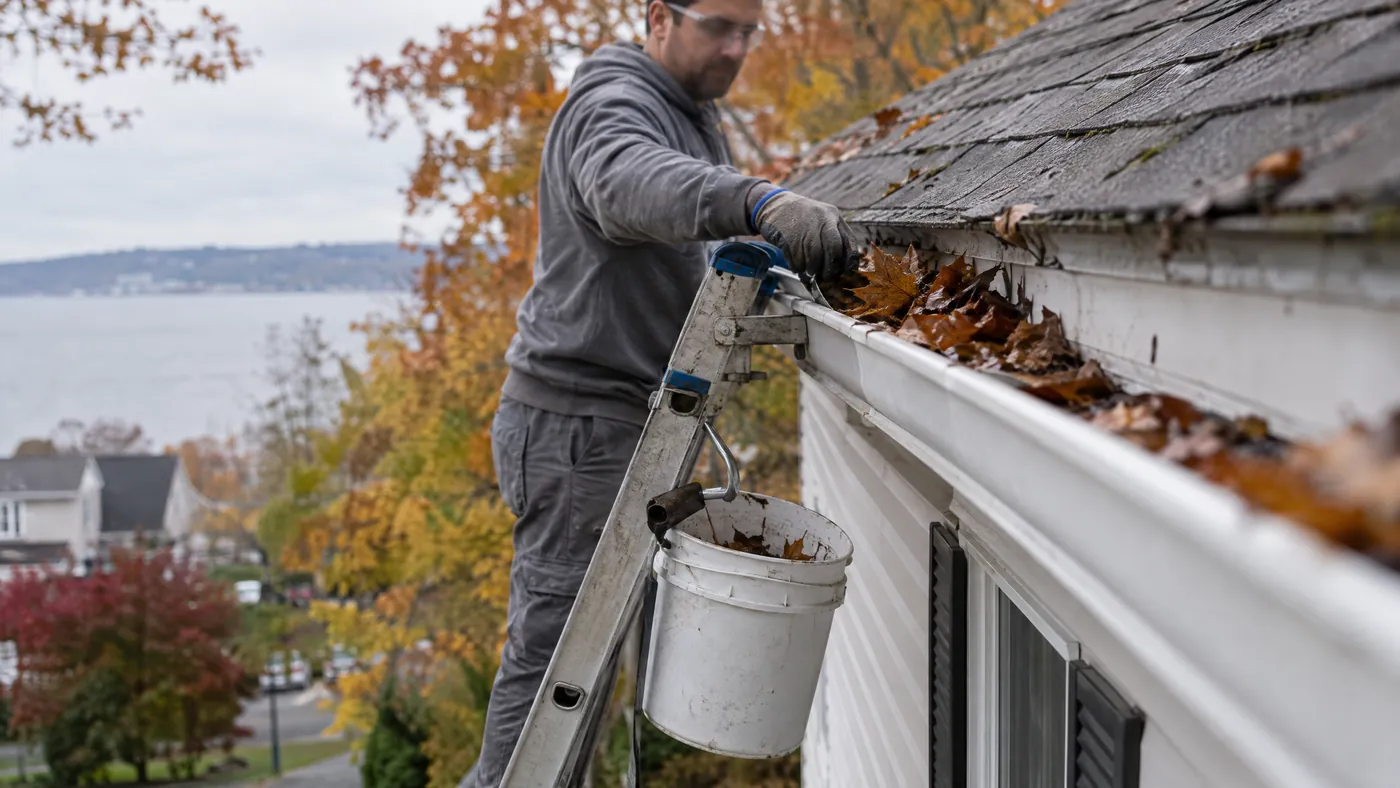
On a Staten Island lot with mature trees, one cleaning is rarely enough. A single early-fall pass leaves the gutters full again by Thanksgiving, right before freezing nights start. Clogged gutters overflow against the fascia and foundation, rot wood trim, and in winter build ice that can pull gutters off the house.
A practical schedule is a cleaning in late October and a second one after the trees are mostly bare. Homes under big oaks or pin oaks may need a third.
What a proper gutter cleaning includes
- Scoop debris out by hand or with a gutter scoop, bagging it rather than dumping it in beds.
- Flush each run with a hose and confirm water flows toward the downspouts.
- Clear each downspout from the top and bottom; a blocked elbow is the most common failure.
- Check that downspouts discharge at least a few feet from the foundation, using extensions or splash blocks.
- Look for loose hangers, leaking seams and sagging sections, and fix them while you're up there.
In NYC, gutter cleaning commonly runs roughly $150 to $350 per visit for a typical detached or two-family home in 2026. Third stories, steep roofs, heavy debris and minor repairs push the price up. Ask whether downspout flushing and haul-away are included in the quote.
Yard, lawn and tree tasks before winter
Fall is the best time to fix a tired Staten Island lawn: soil is warm and seed takes hold before winter. Aerate compacted areas, overseed thin spots, and feed with a fall fertilizer by mid October.
Keep raking or mulching leaves regularly. A thick wet mat left on grass over winter smothers it and invites mold. Shred leaves with a mower and leave a thin layer, or bag the rest following DSNY's current yard-waste rules.
Cut back shrubs so they sit at least a foot off siding, the AC condenser and the gas or electric meter. That keeps moisture and pests away from the house.
Tree limbs over the roof and wires
Look up. Dead or heavy limbs hanging over the roof, driveway or a neighbor's yard are the most common cause of storm damage on the island. Fall is a good time for an arborist to remove them, before snow and ice add weight.
Two rules matter here:
- Never touch or trim near power lines. If a limb is on or near overhead lines, call Con Edison. Only the utility or its contractors should work there.
- Street trees belong to the city. The tree between the sidewalk and the curb is managed by NYC Parks. Don't prune it yourself; report problems through 311.
If tree roots have lifted the sidewalk in front of your house, that's a separate issue with its own rules. Our guide to who is responsible for sidewalk repair in NYC explains violations, costs and the street-tree exception.
For yard cleanups, pruning and seasonal planting, our landscaping and outdoor work crews handle the heavy lifting so you're not spending every weekend in November with a rake.
Fence repair or replacement: what does fence installation cost?
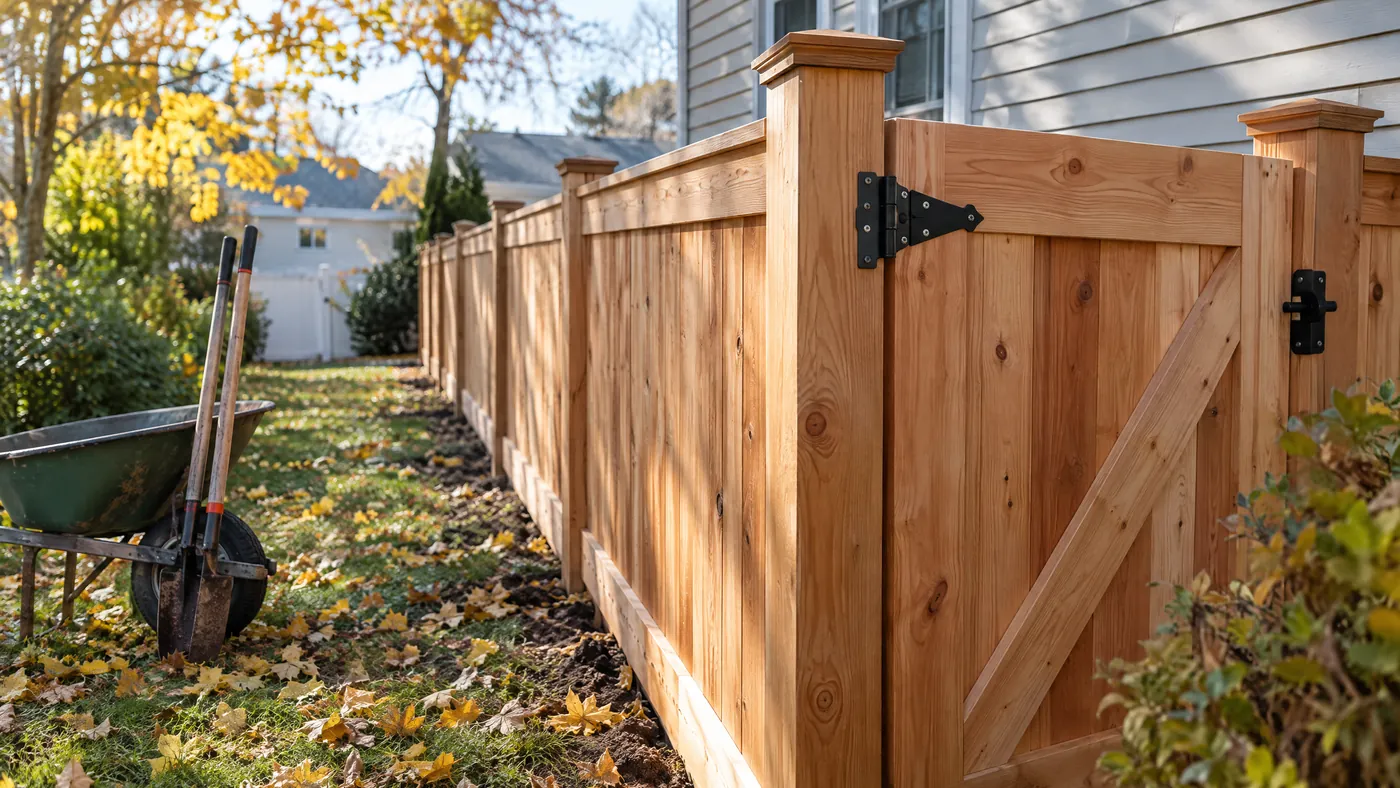
Fences take a beating from wind, sprinklers and frost heave. Walk the whole line in early October and push on every post. Leaning sections, rotted post bottoms, broken pickets and gates that drag are all easier to fix before the ground freezes.
Small repairs, like resetting a post in concrete or replacing a few boards, are usually a few hundred dollars. When more than a third of the posts are failing, replacement often makes more sense than patching.
Typical NYC fence installation cost by material
These are typical New York City market ranges for installed fencing in 2026, per linear foot, including posts and standard hardware. They vary with height, terrain and finishes.
| Material | Typical installed cost per linear foot | Lifespan and notes |
|---|---|---|
| Chain-link (galvanized or vinyl-coated) | $20–$45 | Lowest cost; little privacy unless you add slats |
| Pressure-treated or cedar wood | $30–$60 | Classic look; needs staining every few years |
| Vinyl (PVC) privacy | $40–$80 | Low maintenance; can crack in hard freezes if cheap |
| Aluminum ornamental | $45–$90 | Rust-free, good for front yards and pool areas |
What pushes the price up: removing and hauling away an old fence, gates (often several hundred dollars each), sloped yards that need stepped panels, rock or old concrete where posts go, and taller privacy heights. What brings it down: a straight, flat run, reusing good posts, and simple panels.
Before you build, check height limits and property lines. Front-yard fences generally have stricter height rules than backyard ones, and your survey should show where your lot ends. If you're unsure, check with the NYC Department of Buildings or call 311. Always get a written, itemized estimate that lists material, height, number of gates and whether removal is included.
How to winterize a house before the first freeze
Outdoor faucets and irrigation
Frozen pipes are the most expensive fall task people forget. Every outdoor faucet, or hose bib, has a pipe that runs through the exterior wall. If water sits in it during a hard freeze, it can split inside the wall, and you won't know until the spring thaw floods the basement.
To winterize your house's outdoor water:
- Find the indoor shut-off valve for each outdoor faucet, usually in the basement near the front or back wall.
- Close the valve.
- Go outside, open the faucet and let it drain completely.
- Leave the outdoor faucet open all winter so any leftover water can expand.
- Disconnect hoses, drain them and store them inside.
If you have an in-ground sprinkler system, shut off its supply and have the lines blown out with compressed air by early to mid November.
While you're in the basement, insulate any supply pipes that run along exterior walls or through a cold crawlspace or garage.
Deck, stairs and walkways
Exterior stairs and decks are a slip hazard all winter. Check for soft or cracked boards, loose railings, wobbly balusters and popped nails. Replace rotted boards now; ice will make them worse.
Check concrete steps, stoops and walkways for cracks and loose pieces. Water that gets into cracks freezes, expands and turns small cracks into broken steps by March. Patching now beats rebuilding a stoop.
Coastal storm and nor'easter prep for East Shore and South Shore homes
If you live in Midland Beach, South Beach, New Dorp Beach, Oakwood Beach, Great Kills, Tottenville or other low-lying blocks near the shore, fall is also storm season. Nor'easters can bring days of heavy rain, high wind and coastal flooding from October through spring.
Know your flood zone
Look up your exact address on NYC's flood hazard maps (available through the city's website or by calling 311). Your zone affects flood insurance requirements and how seriously you need to plan. Standard homeowners policies generally don't cover flood, so check with your insurer or agent.
Flood prep checklist
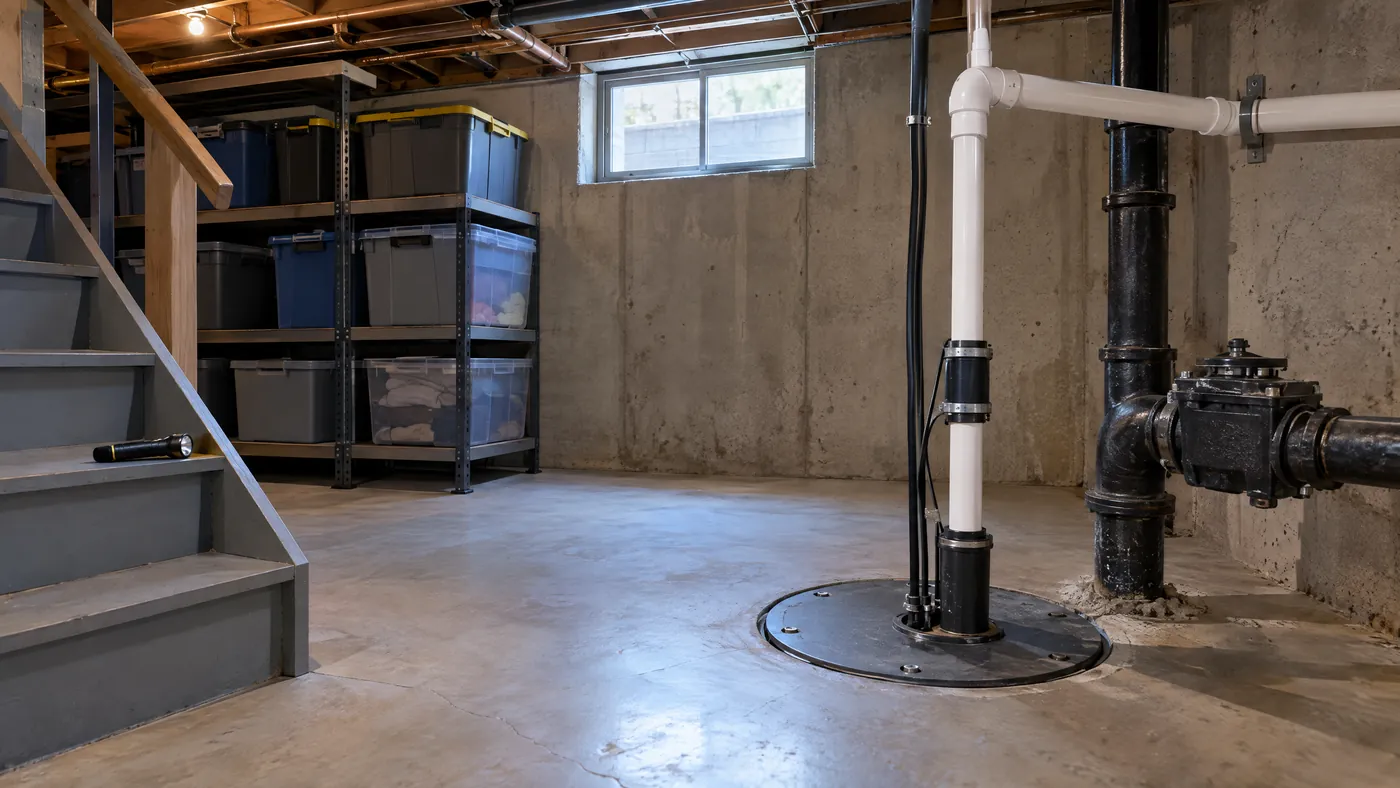
- Test the sump pump. Pour a bucket of water into the pit and make sure the pump kicks on, empties the pit and shuts off. Check that the discharge line is clear and points away from the house.
- Consider a battery backup. Storms knock out power exactly when the pump is needed most.
- Check the backwater valve. If you have one on the main sewer line, make sure it opens and closes freely and isn't blocked. If you don't, ask a licensed plumber whether your house needs one; this is plumbing work that requires a NYC licensed master plumber.
- Move valuables up. Get documents, photos, electronics and anything irreplaceable off the basement floor and onto shelves or upstairs.
- Clear exterior drains. Area drains at the bottom of driveways and stairwells clog with leaves and are a common way water gets in.
- Secure the yard. Tie down or store furniture, grills, trash cans and anything wind can throw.
- Know where your shut-offs are. Water main, gas meter and electrical panel.
Many of the same causes and fixes apply across the city. Our guide to wet basement waterproofing in southeast Queens covers grading, drainage, sealing and interior drain systems in detail, and most of it applies to Staten Island basements too.
Heating system, chimney and detectors
Get the boiler or furnace serviced in October, before the first cold night when every service company is booked. Replace furnace filters, bleed radiators if you have hot-water heat, and make sure nothing is stored near the boiler.
If you burn wood or have an oil or gas appliance that vents through a chimney, have the flue inspected and cleaned. Look for missing chimney caps, cracked crowns and loose bricks.
Test every smoke and carbon monoxide detector, and replace batteries or expired units. Most detectors have a manufacture date on the back and should be replaced roughly every 10 years. NYC requires both smoke and carbon monoxide alarms in homes, and if you rent out a unit you're responsible for providing working ones.
For landlords with a rental unit, a home maintenance plan can cover seasonal checks, emergency calls and tenant requests on one number, with photos from every visit.
Getting help with fall maintenance on Staten Island
Some of this list is a Saturday afternoon. Some of it, like two-story gutters, fence replacement and flood prep, is better handed to a crew with the right ladders and tools. We work across the island, from St. George and Port Richmond to Great Kills and Tottenville; see our Staten Island service area for more.
When you're comparing contractors, ask for a written, itemized estimate, and verify that any home improvement contractor holds a DCWP Home Improvement Contractor license and carries insurance. Our landscaping, yard cleanup and outdoor work covers gutters, leaf cleanup, fence work and seasonal prep.
To book a visit, request a free estimate or call or text 929-400-9900. Crews speak English, Spanish, Bengali, Hindi and Urdu.